

Building SEO and conversion optimisation into your web design from the start saves money and delivers better results. If you leave it for later, you’ll likely end up reworking things that should’ve been done right from the start.
We’ve built websites for Brisbane businesses that ranked well and converted from day one. We’ve also fixed sites where teams added SEO later, which costs more and delivers weaker results.
In this article, we’ll explain why search engine optimisation (SEO) and conversion rate optimisation (CRO) should work together. We’ll even cover what happens when you skip this step and share the key features of a conversion-ready website.
Ready? Let’s begin.
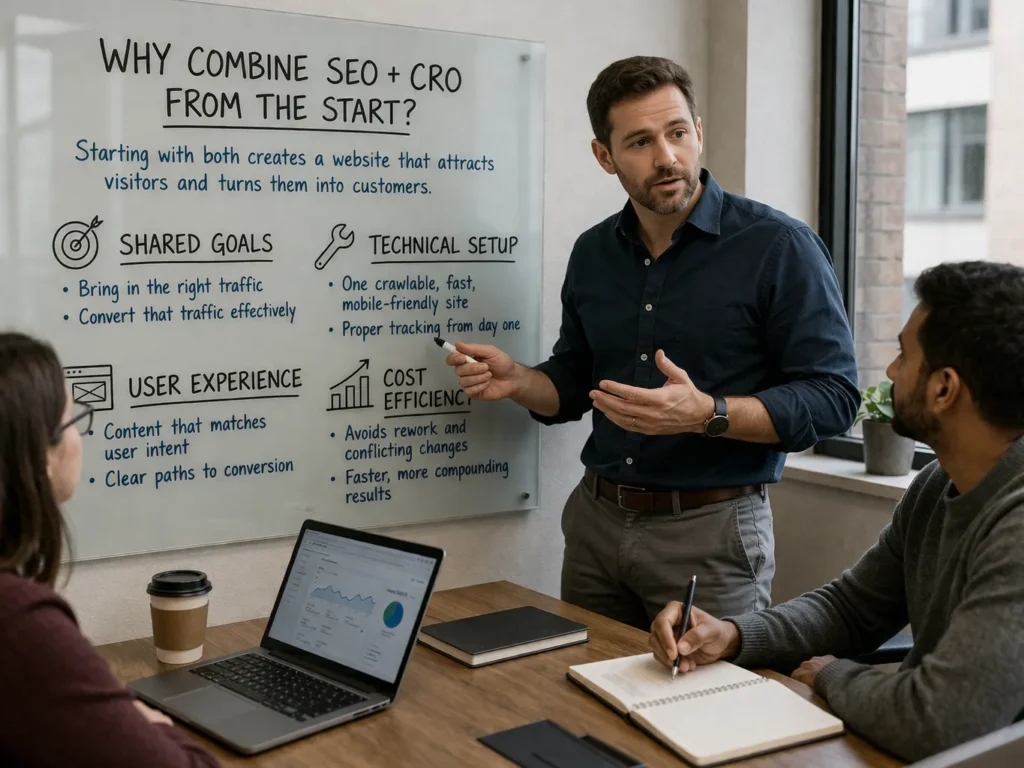
You need to plan SEO and CRO together because they rely on the same technical setup and aim for the same business results (just from different angles). When you split them up, you add extra cost and slow down your progress.
Here’s why taking a unified approach from the start is important:
Put simply, this approach lets your team scale and refine the site with more clarity later on.
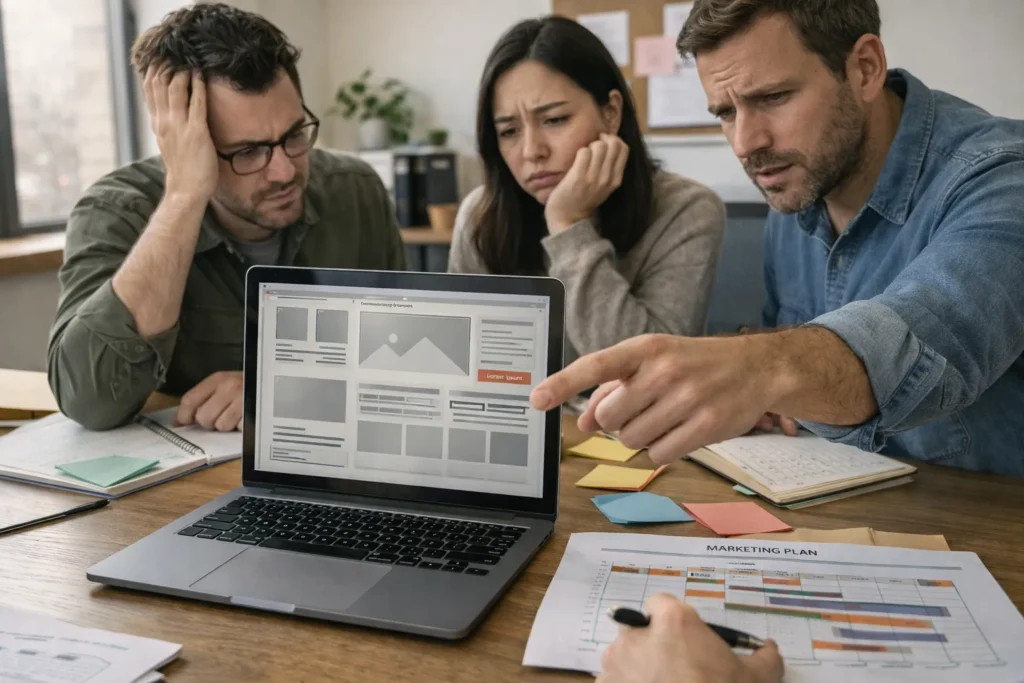
Adding SEO after launch causes structural problems, wasted budgets, and lost leads during fixes. Many businesses treat SEO as an afterthought, then wonder why their site sits invisible on Google. The consequences include missed opportunities to attract and convert the right visitors.
We’ll go into more detail on these scenarios below.
Unfortunately, much of the visibility issue comes down to how the site is built. Poor architecture makes it harder for search engines to crawl and understand your pages. And if Google can’t properly interpret your site, your rankings will suffer.
Messy URL structures add to the problem. Since random strings of numbers confuse visitors and signal low quality to search engines, your pages may struggle to rank.
We already mentioned that planning your SEO from day one means you only pay for development once. In comparison, retrofitting your site forces you to rebuild some parts later, which leads to extra cost for work that should’ve been done upfront.
We’ve witnessed Brisbane businesses wait months while developers restructured page layouts. The marketing team sits idle in the meantime, with campaigns ready but nowhere to send traffic. Plus, your acquisition costs keep rising while your site stays invisible. During that time, you’re losing potential revenue every day.
Pro tip: Align your web build timeline with your marketing calendar to avoid wasted spend.
When you fix slow pages or change URLs after launch, visitors start to drop off. They click through from Google, run into a poor experience, and leave.
Lost sales build up during this time. At the same time, your rankings keep dropping. That’s how pages that were gaining traction lose momentum, and it can take months to recover.
Do you know what your competitors do while you are handling all these issues? They capture your target audience with sites they built properly from the start (an absolute nightmare!).
A website built for conversions typically includes a clear funnel, strategic CTAs, trust signals, Core Web Vitals compliance, and proper analytics setup. These elements work together to guide visitors toward action.
Take a look at the features that separate high-converting sites from the rest:
Never settle for average performance when you can actively improve it by applying these fundamentals.
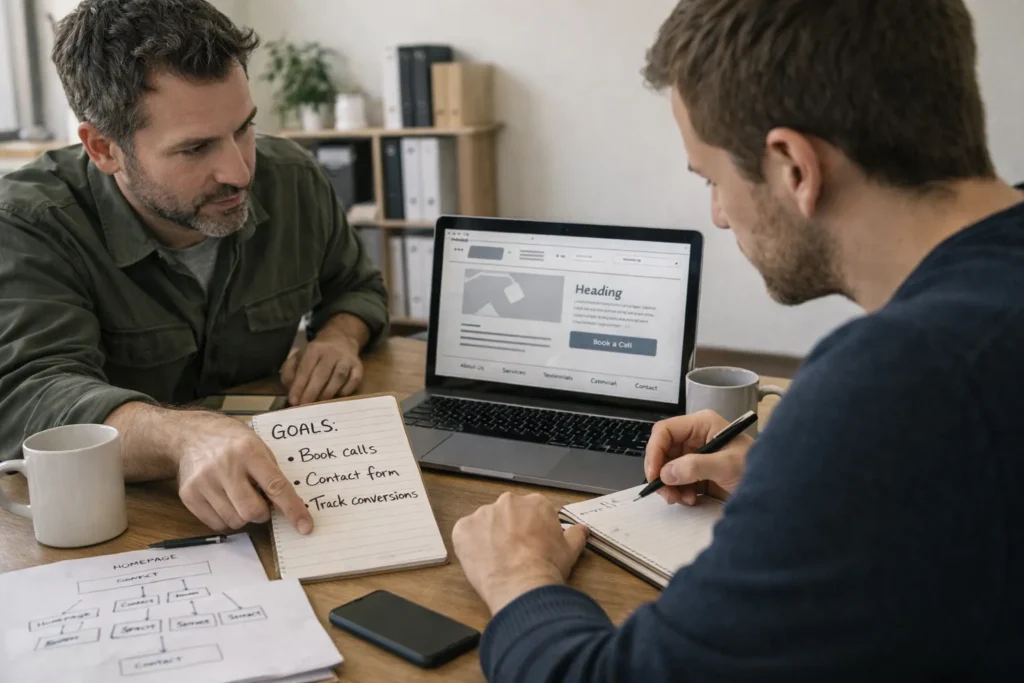
You brief your web designer for SEO and conversions by defining business goals, asking about site structure, and requesting tracking tools upfront. Most business owners skip this conversation entirely and focus on colours and layouts. But those elements alone don’t generate leads.
So, you should start your briefing by defining your business goals and desired actions before the design phase begins. Do you want visitors to fill out a contact form or book a call? How about purchasing a product?
Your developer needs to know about these preferred actions so every page supports that outcome (it helps avoid adding features that don’t contribute to results).
You also need to ask if your web designer plans to structure the site for search engines and conversions. The planning should include URL hierarchy, internal linking, and how landing pages connect to service pages.
If the person building your site can’t answer these questions clearly, they may not be the right fit. It’s because the way they structure your site affects how easily Google can crawl it and how quickly visitors can find what they need.
Also, don’t forget to request Google Analytics, user behaviour tracking, and CRO tools from day one. One of our recent clients launched their site without any tracking in place. They had no idea which pages performed well or where visitors dropped off.
Practical tip: Limit each page to one primary goal to avoid splitting user attention.
A website built for conversions needs SEO, and CRO planned together from the very beginning. Treating them as separate projects leads to structural problems, wasted budget, and missed leads. Every month you spend fixing preventable issues is a month your competitors pull ahead.
If you’re a Brisbane small business planning a new site or redesign, demand an integrated strategy from your web designer. Ask how they handle site structure, tracking setup, and conversion funnel planning before any design work begins.
Ready to build a website that ranks and converts from day one? Get in touch with us to discuss your project.
Company Reviews