


Real estate agents with a professionally designed website consistently attract more enquiries, build stronger trust, and close leads quickly. In practice, many buyers first assess an agency online before attending an open home or making contact.
At DevelopersDex, we’ve seen firsthand how strong website design separates agents who generate steady leads from those who don’t. As first impressions online form quickly, a poorly structured page can lose prospects and reduce enquiries from potential buyers.
This article covers listing structure, lead-capture mechanics, credibility signals, and mobile performance. Read on, and you’ll know exactly what your site needs to compete.
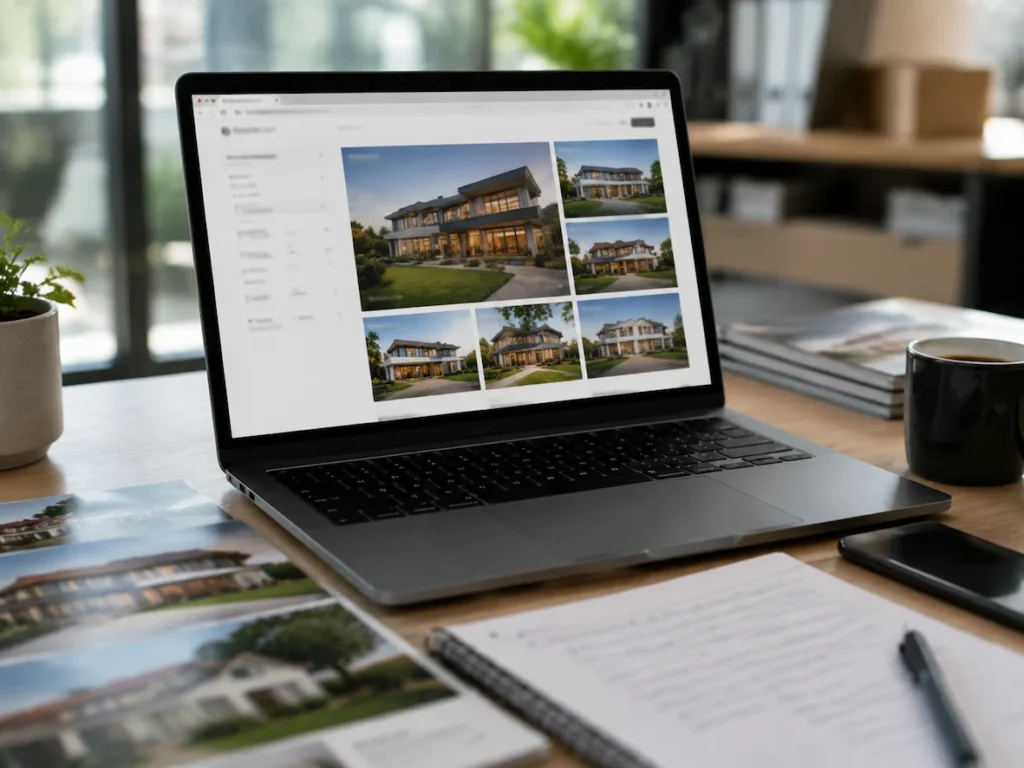
Web design for real estate agents means your page answers three questions instantly: who you are, what you offer, and how to get in touch with you. Clients shouldn’t have to dig through three or four pages for that information, as it increases the bounce rate.
Two areas specifically decide if a visitor stays or leaves.
A listings page is where buying decisions begin. High-quality photography, clear pricing, and suburb-level filters give buyers the tools to self-qualify before picking up the phone. And that’s less wasted effort for both sides.
CRM integration further keeps those listings current. We’ve seen people import over 8000 of property listings daily via CRM systems across the industry, so a site without database connectivity falls behind quickly. When buyers notice outdated content, they move on.
The thing is, good design here isn’t about creativity alone. Intuitive navigation, sort by price, bedroom count, and location, keeps prospects on your page longer and highlights the properties most relevant to them.
Every page on your site is a chance to collect an enquiry. Because of this, a clear call to action placed above the fold is one of the simplest ways to guide visitors toward contacting you.
Beyond that, easy appointment booking and short contact forms remove extra steps for potential clients. That’s why set your enquiry form to five fields or fewer. In fact, every extra question you add is one more reason a buyer closes the tab and sends their business elsewhere.
Email response time counts too. You should provide a direct address alongside your form so buyers who prefer email have an easy, low-friction option right at hand.
Most buyers decide whether to trust an agent within seconds of visiting their website. In this case, a blurry headshot, an outdated bio, or zero client reviews sends them straight to a competitor.
Three website design features separate credible agent sites from forgettable ones:
In short, your credibility signals need to appear within the first view of the page. If a buyer has to hunt for your reviews or sold results, most won’t bother and leave.

If your site loads slowly or breaks on mobile, you’re losing buyers before they ever see a single listing. According to reports, 76% of home searches now happen on a phone or tablet, which makes responsive design a baseline requirement for any agent site.
Google also factors mobile performance directly into search rankings, so a poorly built platform costs you visibility without a single buyer ever seeing it.
And here’s the thing: slow pages cost you leads besides frustrating visitors. Google says pages loading slower than 3 seconds lose 53% of visitors, and users don’t even read the content. We’ve seen agent sites in Fortitude Valley lose enquiries simply because the page took four seconds to load on a smartphone.
To prevent this, tap-friendly buttons, readable font sizes, and vertical layouts create a smoother experience for on-the-go buyers. These changes are simple to implement, but ignoring them can make it harder for potential clients to contact your agency.
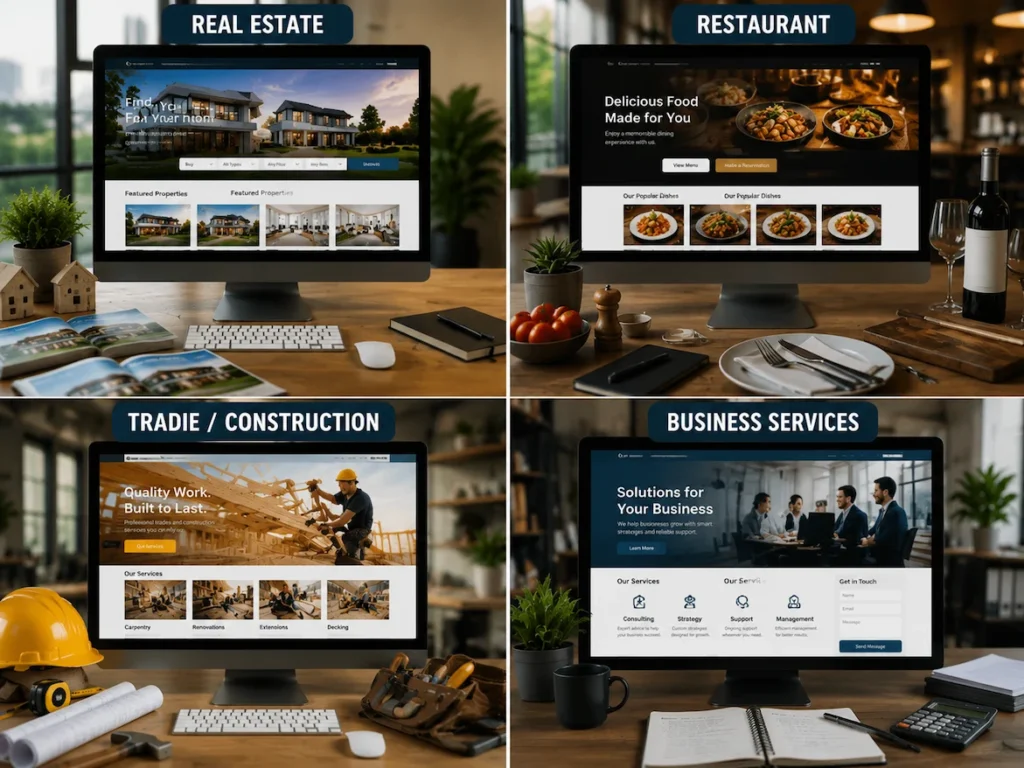
Strong web design drives results by giving every business a site that attracts customers and converts leads. That same principle applies to real estate platforms, restaurant websites, tradie sites, and other local service businesses.
The following two things make this idea more concrete.
Every service business, from web design for restaurants to web design for tradies, depends on its first impression. Why? Well, a potential customer landing on a poorly structured page leaves without making contact, regardless of how good the actual service is.
In 2026, 64% of global traffic comes from mobile devices. That’s why electricians, plumbers, builders, and landscapers all enter the same mobile-first reality as real estate agents.
For these businesses, owners investing in responsive design can create a smoother path for mobile visitors to view services, request quotes, and make contact. And businesses that ignore mobile usability risk losing potential customers who leave before taking the next step.
Generally, web design for electricians, restaurants, and tradies shares one non-negotiable rule: a clear call to action on every page. Teams who implement this consistently report stronger lead flow across every service category.
That said, real estate sites carry demands no other industry website faces. For example, a restaurant or tradie platform needs a contact form and a services page. Meanwhile, real estate website design adds dynamic listing databases, CRM integration, and interactive maps.
Here’s where the two diverge across the features that actually drive leads:
| Feature | Real Estate Sites | Other Industry Sites |
| Listing database | Yes, CRM-integrated | No |
| Property search filters | Yes, by price, location, type | No |
| Interactive mapping | Yes, with neighbourhood guides | Rarely |
| Virtual tour embeds | Yes, high-resolution galleries | No |
| Analytics tracking | Per listing page | Per service page |
| Local content pages | Suburb-specific guides | General location pages |
On top of these, embedding neighbourhood guides within your platform captures high-intent local search traffic. For instance, buyers researching specific suburbs find your content first, then continue through to your listings.
Website analytics then show which pages attract visitors, generate enquiries, and need further improvement. Reviewing this data helps you refine your lead generation strategy around what potential customers respond to most.
Good website design isn’t a one-time project. You have to maintain an ongoing investment in your brand, credibility, and ability to win clients before a competitor does. That said, agents who treat their online presence seriously generate more work from their site than those who don’t.
Four elements separate a high-performing real estate website from one that just sits there:
Miss one, and the others carry the load.
Ready to build a site your clients trust from the first click? The DevelopersDex team designs and launches real estate websites built for local search success. Get started with us today.
Company Reviews