

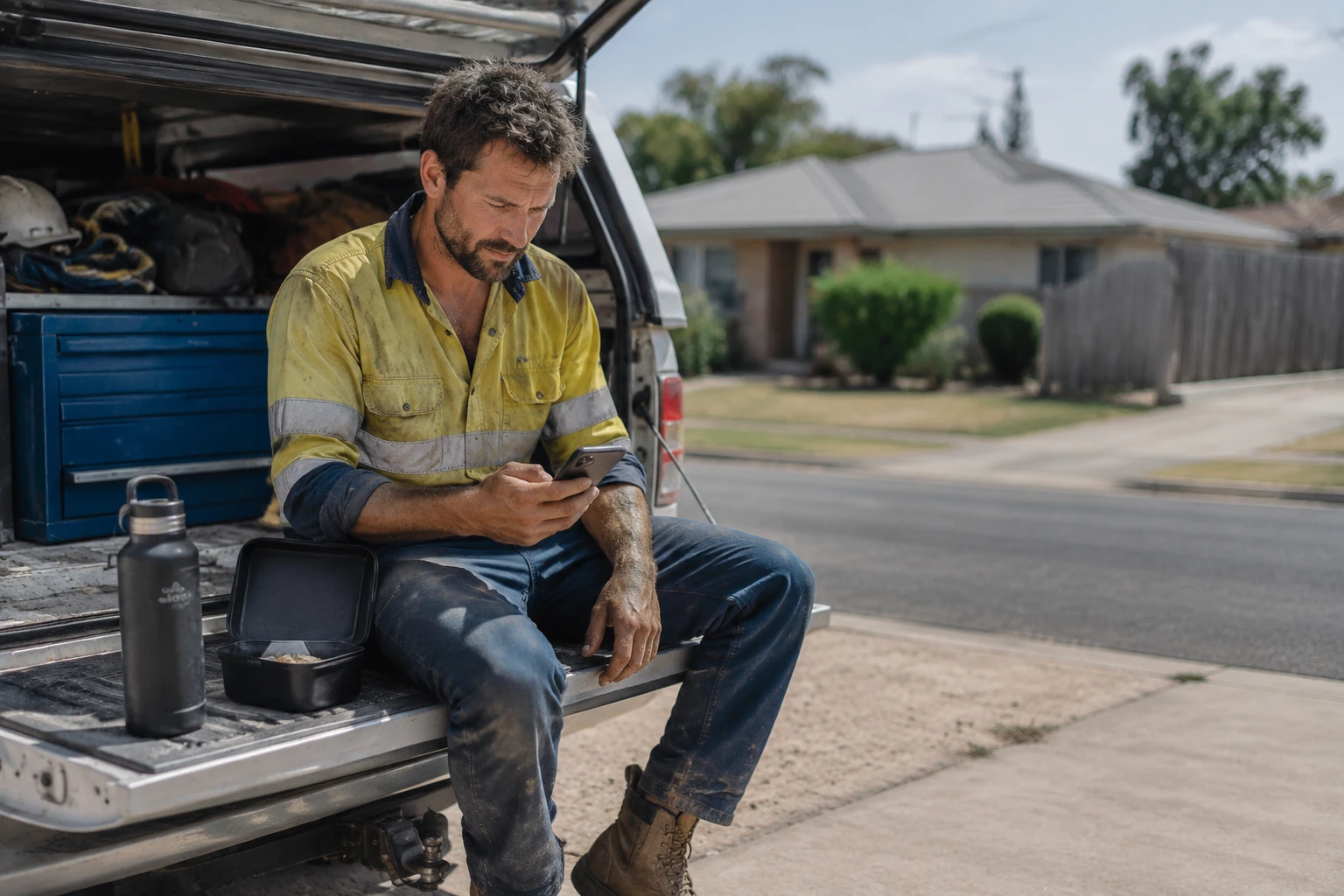
Your website looks fine. It has your logo, a list of services, and maybe even photos of recent jobs. But if visitors aren’t picking up the phone or requesting a quote, the site isn’t doing its job.
The issue usually comes down to what happens after someone lands on the page. They need to quickly understand what you do, feel confident choosing your business, and know exactly how to contact you. Without those basics, a professional-looking website won’t generate enquiries.
This guide breaks down exactly what your tradie website needs to start bringing in work. You’ll learn what web design for tradies needs to generate leads, how to build trust, and what to look for in a web designer.
First, let’s look at why a good-looking website alone isn’t enough.
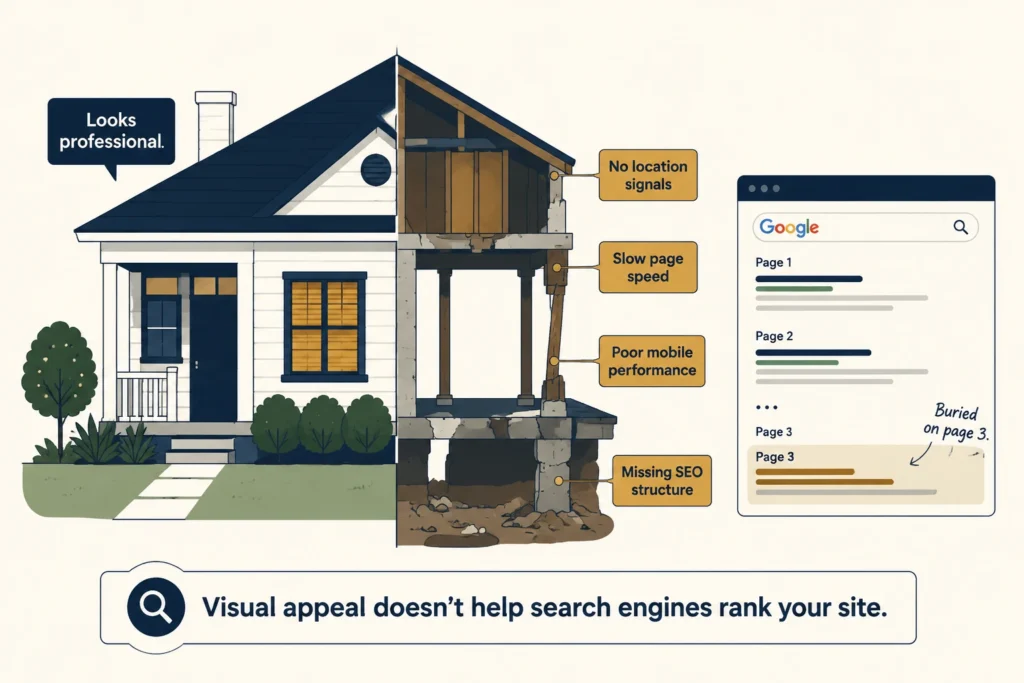
A nice-looking website won’t get you found online because visual appeal alone doesn’t help search engines understand your site. Google ranks pages based on relevance, speed, and structure rather than photography or colour schemes. So a site can look professional and still sit on page three because its technical foundation is missing.
This is a common issue in web design for small businesses. The focus often goes into visuals while the factors search engines measure, like page speed, mobile performance, and location signals, get overlooked. When those signals are missing, even a polished site gives Google fewer reasons to rank it.
Most tradie websites cover the basics: a business name, a list of services, and a phone number somewhere on the page. But a great tradie website goes further than that. Four things separate a site that generates leads from one that just takes up space online.
Picture a potential customer who finds your site at 7 am before heading to work. They want to book a job quickly. They scroll through your homepage banner, about section, and gallery without finding a clear way to contact you. By then, they’ve already opened a competitor’s site in another tab.
Clear calls to action fix this. A click-to-call button and a short contact form placed high on the page give potential customers a direct path to reach you. And it needs to be immediate. Users form a visual impression of a website in as little as 50 milliseconds, so visitors often make judgements before reading a single word. That’s why contact options should be visible from the moment they arrive.
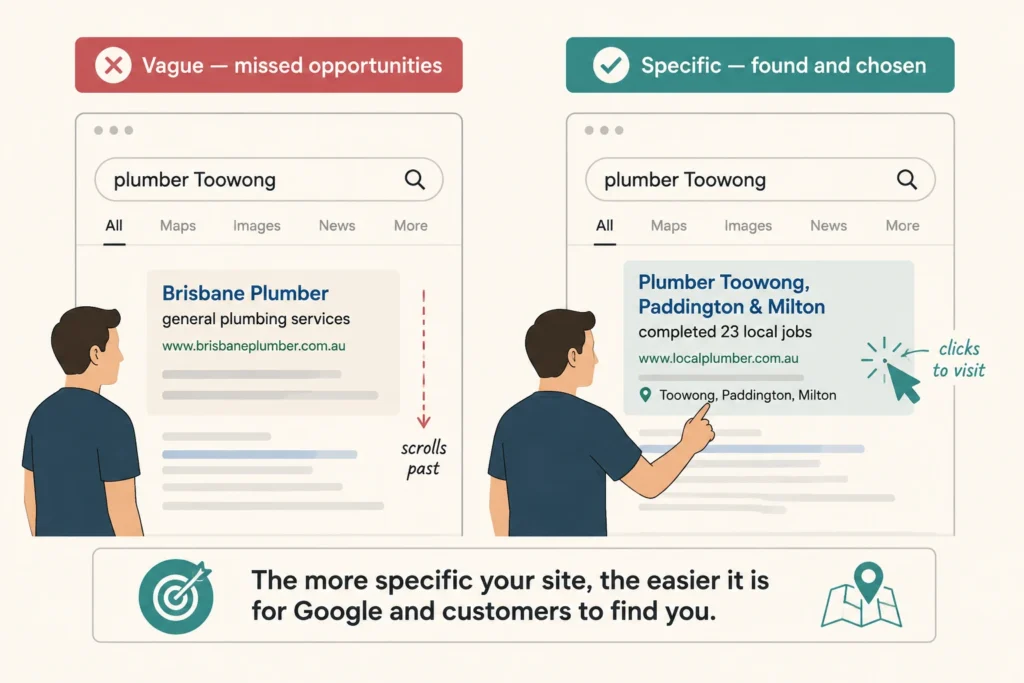
A plumber who services Toowong, Paddington, and Milton but only lists “Brisbane plumber“ on their website is missing opportunities to connect with local customers. When someone searches for a service in a specific suburb, Google looks for pages that clearly match both the service and location. The more specific your website is, the easier it is for search engines and potential clients to find you.
That means listing every service you offer, including any new services you’ve added, and naming the suburbs you actually work in. Past projects are worth showcasing here too. Because a completed job in Toowong or Eight Mile Plains tells Google you operate there, and gives customers proof that you’ve done the work nearby.
Most tradie searches happen on a phone, often while someone’s standing in a hardware store aisle or staring at a leaking pipe. They’re not in the mood to wait around. So if your site takes more than a few seconds to load, they’ll back out and call the next name on the list. In fact, 53% of visitors abandon a website that takes longer than three seconds to load.
Mobile usability is also equally important. If buttons are difficult to tap or text requires zooming in, visitors are forced to work harder than they should just to contact your business. A quick test on your own phone will usually reveal these issues.
Local SEO (Search Engine Optimisation) helps Google connect your business to searches happening near you. Say you’re an electrician in Brisbane. You’d rather appear for searches like “electrician Brisbane” or “electrician Chermside” than simply “electrician.” That’s because those are the searches local customers are actually making when they need help.
And to get in front of them, you just need to get the basics right (they’re pretty simple). Start with a verified Google Business Profile linked to your website. Then make sure your service pages mention the suburbs and areas you work in. Keeping your business details consistent across online directories helps Google accurately match your business to local searches.
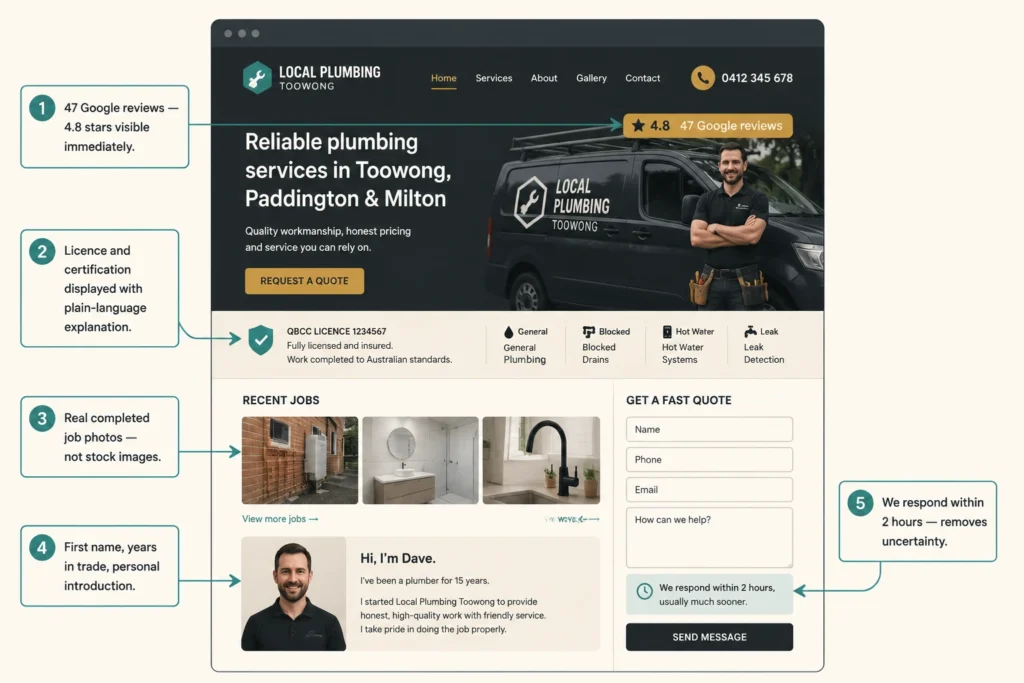
Tradie work is personal. Customers are letting you into their home, sometimes when they’re not there, which makes trust a bigger factor than it is for many other services.
Reviews are one of the fastest ways to build that confidence. Take a homeowner as an example. He/she is far more likely to call a plumber with 47 Google reviews and a 4.8-star rating than one with none. You should also display any licences or certifications alongside your reviews. Many people don’t know what to check when choosing a tradie, so explaining what each one covers can help them feel more confident.
Real photos help too. A gallery of completed jobs shows visitors exactly what to expect, something stock images can’t do. If you’re a one-person operation, include a short introduction and mention how long you’ve been in the trade. People hire people, not just businesses.
One more thing worth adding: tell visitors when they can expect to hear back from you. A simple response-time estimate removes uncertainty and reassures potential customers that their enquiry will get a response.
DIY platforms are built for speed and simplicity, while professional websites are built around flexibility, performance, and growth. Both can look professional on the surface, but the difference shows up in areas like SEO, customisation, and lead generation. The table below compares how they stack up.
| Feature | DIY Website Builder | Professional Tradie Website |
| Setup | Quick to set up yourself | Built and configured by a professional team |
| Design | Template-based, limited customisation | Custom web design and development built around your business |
| Mobile Friendly | Basic mobile support | Fully optimised for mobile devices and user-friendly |
| Local SEO | Minimal or no local SEO setup | Local SEO configured from the ground up |
| Website Hosting | Shared hosting included in plan | Secure hosting with performance optimisation |
| Google Ads Integration | Limited | Full integration with Google Ads and social media platforms |
| Logo Design | Not included | Can include logo design as part of the package |
| Full Ownership | Platform-dependent | Full ownership of your site and content |
| Cost | Low upfront, monthly fees apply | Higher upfront, stronger long-term return |
The right choice depends on where your business is today. A DIY website can be enough when you’re getting started and need an online presence quickly. But as your lead flow grows, a professionally built site gives you more control over SEO, branding, and the customer experience.
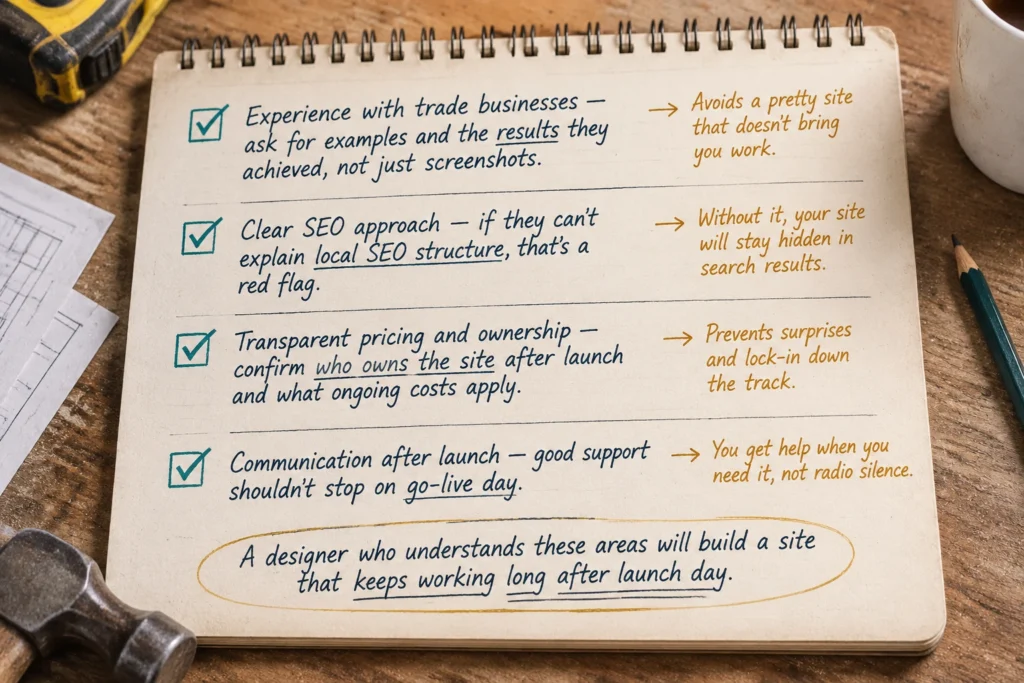
Not every web designer understands how tradie businesses get work. Some build websites that look impressive but fail to bring in enquiries once they’re live. So before you commit, check that your designer understands these areas:
A designer who understands these areas will build a site that does more than look good on launch day. It will continue supporting your business long after it goes live.
A successful tradie website should help potential customers find your business, understand your services, and make it easy to get in touch.
And that starts with the basics: clear calls to action, focused service pages, fast mobile performance, and trust signals like reviews and licences. When these pieces work together, your website becomes a tool that supports your business instead of another expense you can’t measure.
If you’re not sure where your current site is falling short, get in touch with DevelopersDex. Our tradie web design specialists can review it and give you a clear picture of what’s holding it back.
If you still have questions about getting a tradie website built, these are the ones we get asked most often.
A basic professional tradie website in Australia typically starts around $1,500 and can range up to $5,000 or more depending on the number of pages, features, and whether SEO setup is included. For comparison, DIY platforms like Wix or Squarespace cost less upfront but charge ongoing monthly fees that add up over time.
Most professional tradie websites take between 2 and 6 weeks to build, depending on how quickly content, photos, and feedback are provided. The more prepared you are with your services, service areas, and job photos, the faster the process moves.
Yes. Search engines tend to favour websites that are kept current. Updating your service pages, suburb list, and project gallery every few months gives Google more reason to rank your site.
Yes. Your domain name is separate from your website and can be transferred to a new site without any issues. A good web designer will handle this as part of the build process.
Company Reviews