


Your website is often the first impression potential customers get of your business. Many electricians lose potential customers because their websites fail to build confidence. If a site looks outdated, loads slowly, or is difficult to use, people often choose a competitor.
Homeowners search online before they call anyone these days. They check reviews, service areas, and contact details within seconds. And if your site doesn’t deliver, someone else’s will.
In this article, we’ll cover what makes electrician websites generate leads and how digital marketing ties into good design. We’ll also look at what a website needs to grow with your business.
Let’s get into it.
Electricians mostly deal with urgent, same-day requests, so their websites need to work differently from most trade sites. A customer with a blown fuse won’t browse for long. They want fast answers and a way to book someone in right away.
On top of that, this urgency influences every part of the website, including its layout and content. The next step is to look at what customers search for first and where the costs usually land:
Most homeowners look for fast contact details, proof of licensing, and clear service areas before calling. These details build trust within the first few seconds on a page. And visitors often leave before reading anything else without them.
At the same time, reviews and past job photos help people feel confident when hiring an unfamiliar electrical company. People want proof the work gets done properly. A gallery of finished jobs is more convincing than any paragraph of text.
We’ve reviewed dozens of electrician websites, and the ones with visible online reviews consistently book more jobs. So, that single addition often makes the difference between a call and a bounce.

A basic electrician website typically costs between $1,500 and $4,000, depending on what features you need. However, custom builds with booking systems and photo galleries usually run higher (booking systems and photo galleries usually push the price toward the higher end).
With that in mind, it’s best to think of the cost as an investment instead of an expense. A single extra booked job often covers the setup fee within weeks. That return makes web design for electricians worth prioritising early.
Plenty of trades face this same decision. Website costs for tradies are generally similar across the industry. Either way, electricians often need appointment booking sooner given how urgent their call-outs tend to be.
Certain design choices directly influence how likely visitors are to contact your electrical business. It’s all about removing friction between a visitor and a booked job rather than looking flashy.
If you’re deciding where to begin, focus on these two features first:
Every page on your site needs a clear CTA (Call to Action), including the homepage. Visitors shouldn’t have to hunt for a way to reach you. So, a missing button on one page can cost you a booking.
Specific wording tells potential customers exactly what happens next. Buttons like “Book a Callout” attract more clicks than vague text like “Learn More.” Clear wording reduces uncertainty and makes it easier for visitors to take the next step.
Placing a CTA above the fold also increases the odds visitors take action. That way, people don’t need to scroll to find it. A well-placed button often turns a browse into a booking.
Not sure why customers abandon your booking form halfway through? Long forms are usually the reason. Online appointment booking should remove back-and-forth calls, not create new hassles.
In fact, a booking form with three to four fields usually leads to more completed submissions than a longer form. This is one reason effective web design for tradies keeps booking forms short and simple. Fewer fields mean less effort for website visitors trying to lock in a time.
Instant confirmation emails are just as important. They let customers know their booking request has been received, explain what happens, and reduce uncertainty while they wait for a response.
Through our own testing, forms with three to four fields consistently receive more completed submissions. Pairing a short form with an immediate confirmation email gives customers confidence their request was received and explains the next steps.

Digital marketing efforts only work well when the website behind them is fast and functional. An ad campaign can drive plenty of traffic. But if the landing page loads slowly, that traffic goes nowhere.
With lead generation covered, it’s time to see how local search and website design complement each other:
Local search rankings depend heavily on how fast and mobile-friendly your electrical company’s website is. Google also considers page speed, mobile usability, and site structure alongside content quality. Slow-loading pages often increase bounce rates, making it harder for your site to compete for local search visibility.
That said, your Google Business Profile also links back to your website, so make sure your business name, phone number, and address appear the same on both. Consistent information helps search engines verify your business and improves local search trust.
Dedicated service pages for each suburb also help you rank in specific search results. Instead of one generic page, separate pages targeting different service areas are more likely to rank for local searches. This approach works well for web design for plumbers and electricians alike.
Design services should align with campaign goals, whether that’s paid ads, local SEO, or referrals. For example, a landing page built for a Google Ads campaign needs different content than a homepage. A Google Ads landing page should match the ad with a clear offer, relevant information, and a strong call to action.
The same principle applies to campaign landing pages. This is the part many agencies skip, and the results often reflect it. Visitors expect landing pages to match the ad they clicked, making campaign-specific pages more likely to generate enquiries.
Beyond individual campaigns, consistent branding across ads and website design helps people recognise your business. When the same colours, logo, and tone appear across every touchpoint, potential clients feel more confident they’re dealing with the same company.
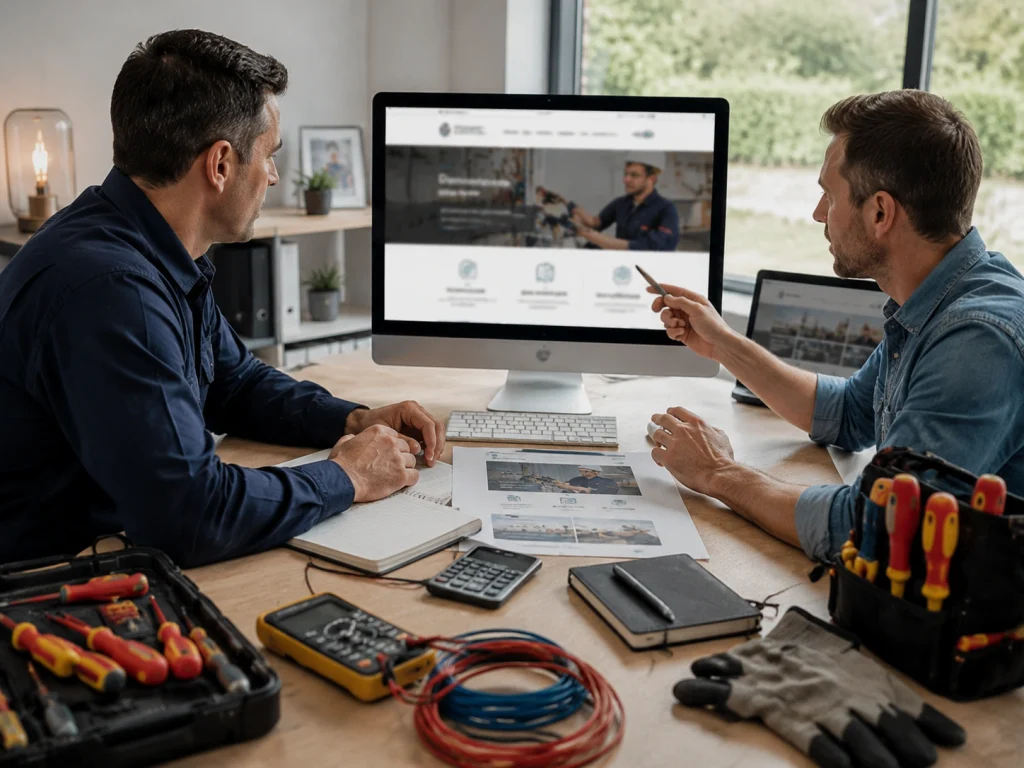
Wondering if your website can keep up as your electrical contracting business grows? Many electricians start with a basic five-page site. But that setup often outgrows itself within a year or two.
Here’s an overview of how a basic site compares to one built for growth:
| Feature | Basic Website | Growth-Stage Website |
| Service pages | One general page | Separate pages per service |
| Booking | Phone only | Online appointment booking |
| Content | Static text | Blog and job galleries |
| Design focus | General layout | Built around trade urgency and local search |
A basic setup works fine at the very start. But it rarely supports long-term success once referrals and reviews start bringing in steady work. Web design for real estate agents and other industries often follows this same early pattern.
With that in mind, it’s worth planning for growth from the very first build. Adding suburb-specific service pages later costs more than including them from day one. Planning for future growth helps you avoid expensive website changes later.
Good web design directly impacts your electrical business’s ability to win local job enquiries. The right layout, clear contact details, and a simple booking process all work together. Small changes often lead to noticeably more calls.
If you’re starting from scratch, prioritise mobile-friendly design and a clear call to action first. Appointment booking can come next once the basics are sorted. These few changes tend to have the strongest early impact.
Ready to get your electrical business the website it deserves? Get in touch with DevelopersDex for a free quote built specifically for electrical contracting businesses.
Company Reviews