

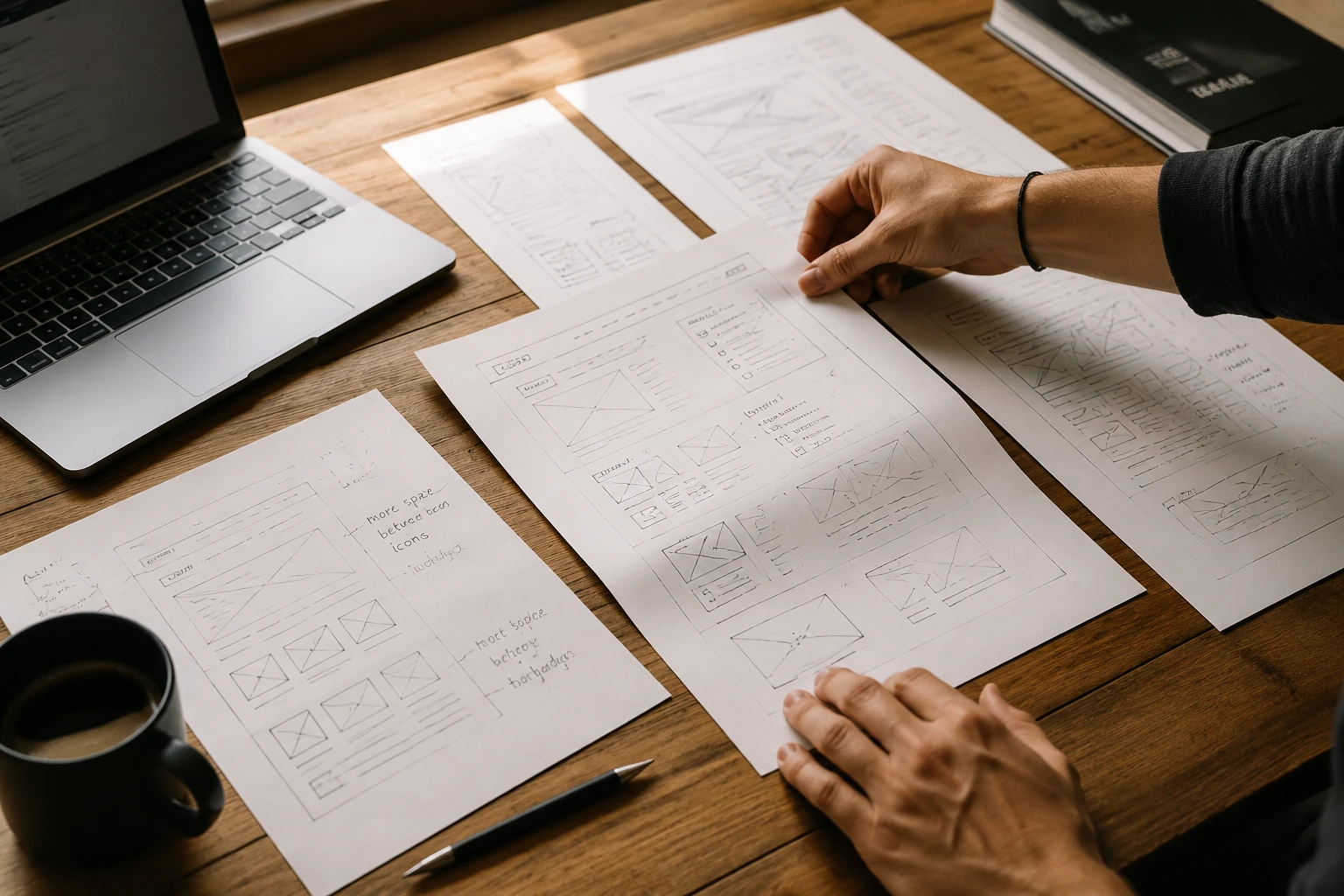
Your business is growing, but is your website keeping up? Maybe customers abandon checkout, pages lag during busy sales, or you’re constantly fighting a template that no longer fits your business.
These are signs your website has hit its ceiling. More plugins and workarounds might buy you time, but they won’t fix the underlying problem. Custom design fixes it by building the site around your business instead of the other way around.
The problem is, many business owners don’t know where to start or whether a custom build is even worth the investment. This guide breaks down what custom web design and development actually involve, what drives the cost, and how to tell if it’s the right move for you.
Let’s get into it.
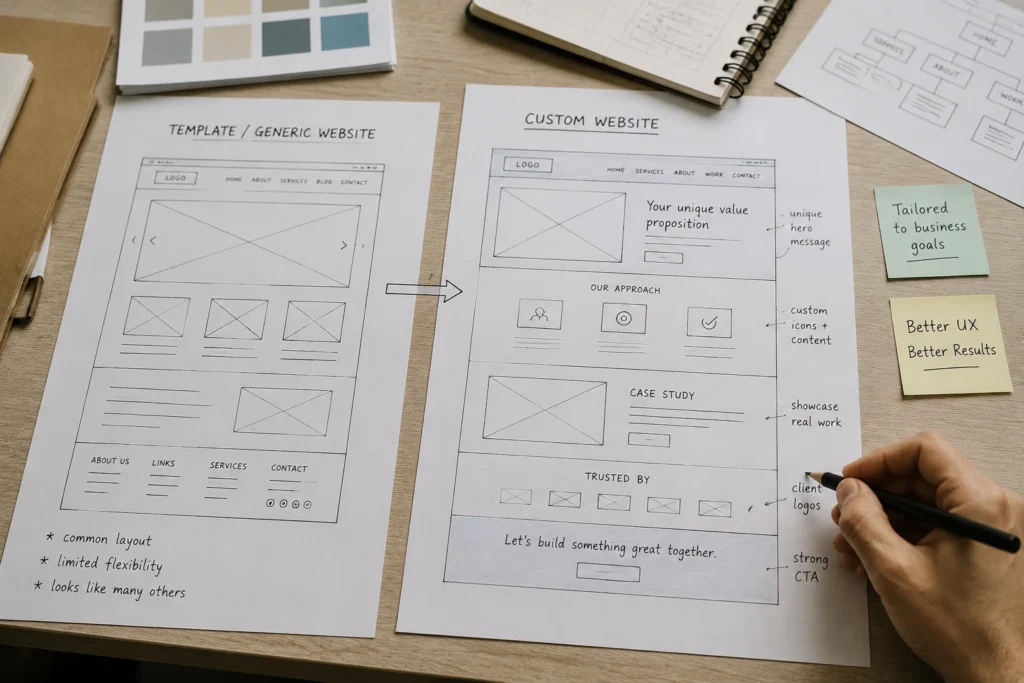
Custom web design focuses on how a website looks and feels. Web development, meanwhile, handles the technical side of the website, including its code, structure, functionality, and integrations.
Together, web design and development determine not just how a website looks, but how it functions and supports the business behind it. What makes both “custom” is that both are built around specific requirements rather than the limitations of a pre-made solution.
But most template-based websites take the opposite approach. You start with a design someone else created and development options someone else decided on.
A custom-designed website gives you control over both, which is why businesses with specific workflows or growth plans often choose this route.
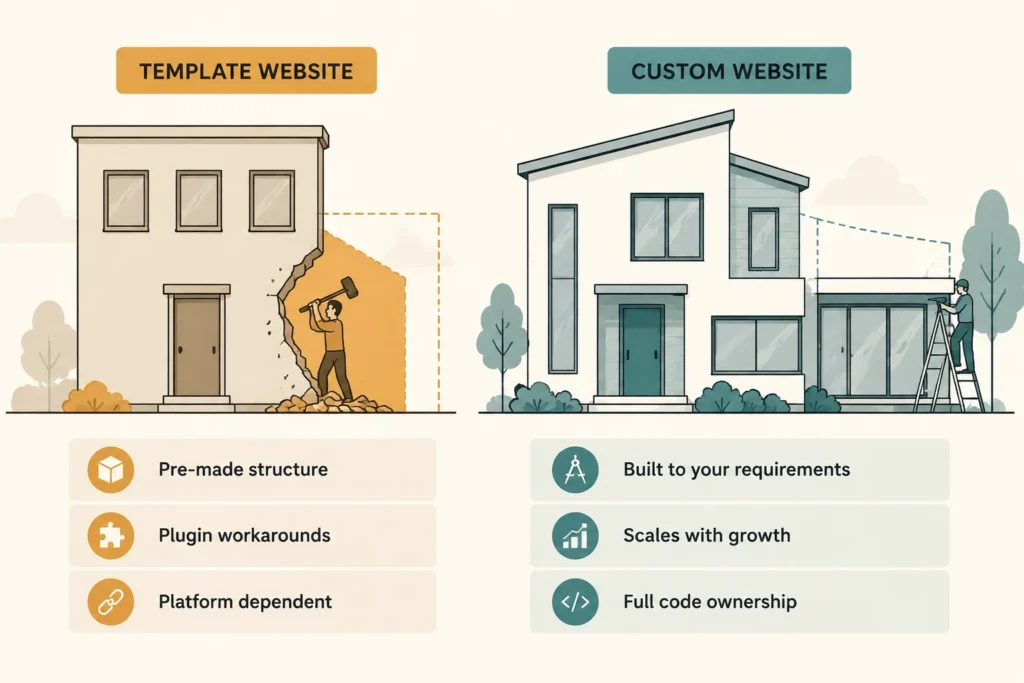
Custom sites are built specifically for your business, while template sites give you a pre-made structure you adapt to fit. The table below breaks down how the two compare:
| Feature | Custom Website | Template Website |
| Design | Unique to your brand | Pre-made, adapted to fit |
| Flexibility | Built to your exact needs | Limited by template structure |
| Performance | Optimised for your content | Varies by theme and plugins |
| Responsive web design | Tailored for all screen sizes | Dependent on template quality |
| Content management systems | Configured to your workflow | Standard CMS setup |
| Ownership | Full control over code and structure | Platform or theme dependent |
| Cost | Higher upfront investment | Lower upfront, higher long-term |
The right option depends on what your website needs to do. For instance, a template works well for simple websites. But once you add complex functionality, integrations, or growth plans into the mix, the differences between the two become much harder to ignore.
Most template sites get outgrown for two reasons: they’re built for everyone, and they can’t scale. We’ll cover both below.
You’ve probably come across template websites before. They often follow the same familiar pattern:
There’s nothing inherently wrong with that, because they’re designed to get businesses online without a long setup process.
But when you look at companies like Atlassian or Shopify, the difference becomes clearer. Their every page element serves a specific business function. The same goes for the layout, navigation, user flows, and supporting features. Together, they support how the business operates and what customers need to accomplish.
That gap exists because templates target the average use case. They work well when requirements stay standard. As those requirements become more specific, the template starts dictating what you can and can’t do.
When a template doesn’t support a feature you need, the usual fix is a plugin. Maybe it’s one for bookings, another for reviews, and a third for live chat. Before long, you’re running a dozen just to keep the basics working. The problem is that each addition slows the site, creates conflicts, and adds to the maintenance load.
The data backs this up. In one analysis, WordPress sites running 30 or more plugins averaged 35 out of 100 on mobile performance scores. For many growing businesses, that’s the point where a new website stops being an upgrade and becomes a necessity.
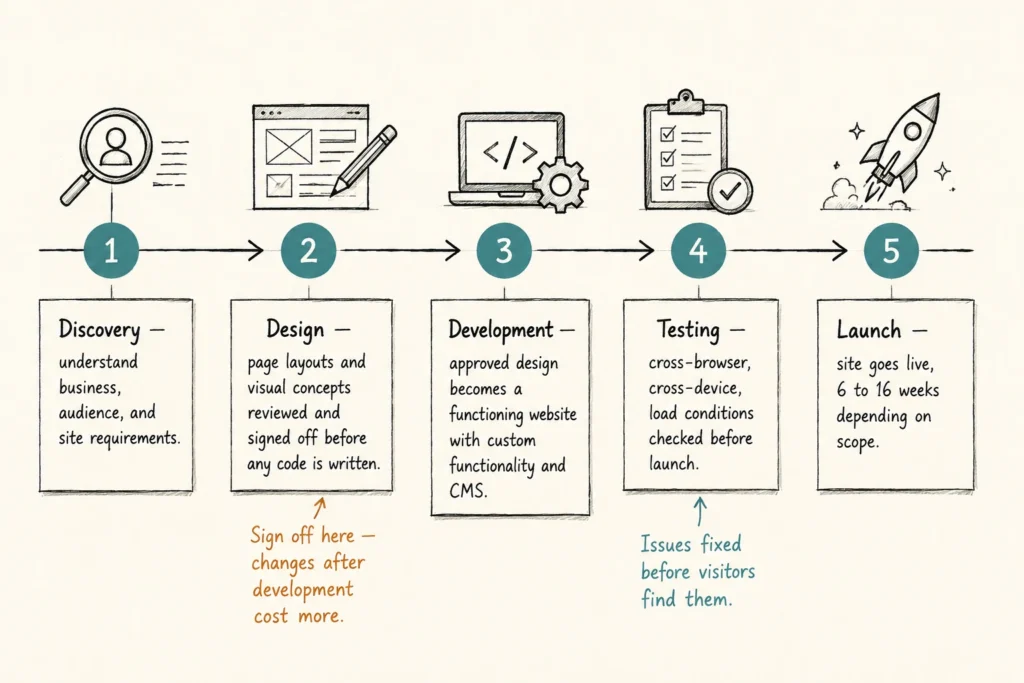
A lot of business owners ask how to design a good web page before they’ve even spoken to an agency. The honest answer is that it starts well before anyone opens a design tool. A custom web design project follows a structured process, and here’s how the process typically moves from start to finish:
The goal is a site that reflects how your business works and gives customers a clearer path to take action.
The only drawback is that a custom build takes longer than a template. But unlike a template, it gives your business room to grow without forcing you into someone else’s structure.
Custom website development doesn’t have a fixed price, and that doesn’t mean the cost is unclear. It depends on what the site needs to do. These are the variables that drive it:
Quick Tip: Make sure the agency you hire walks you through each of these factors before providing a quote. If they can’t explain what drives the cost, treat it as a red flag.

Custom web development makes sense when your website starts limiting how your business operates. If adding new features, managing customers, or supporting growth requires constant workarounds, your current site may no longer be the right fit.
We saw this recently while working on a web design for tradies project. The client’s website couldn’t handle job request forms, location-based service pages, or quoting software integration. None of the templates they tried could support everything they needed, so a custom build brought those requirements together in one site.
By now, you know what sets a custom build apart, what influences the cost, and when your current site may no longer meet your business needs. The next step is deciding whether a custom website gives you the flexibility and functionality you need to keep growing.
At DevelopersDex, our web developers build custom websites for businesses across Brisbane and beyond. If your website is no longer supporting your business goals, we’ll help you find the right approach.
Get in touch with our team to discuss your options.
A few questions that come up often before starting a custom web design project:
Yes, a custom website can support better search visibility by giving you more control over your site’s structure, performance, and technical setup. However, rankings also depend on factors like content quality, SEO strategy, and competition within your industry.
It depends on how well your current website supports your goals. If the platform creates ongoing limitations with functionality, performance, or integrations, building a new site may be more practical than continuing to patch an outdated one.
Good custom website design balances brand presentation with how customers actually use the site. That means user experience, functionality, and the features your business needs all carry equal weight to the visual design.
Company Reviews