

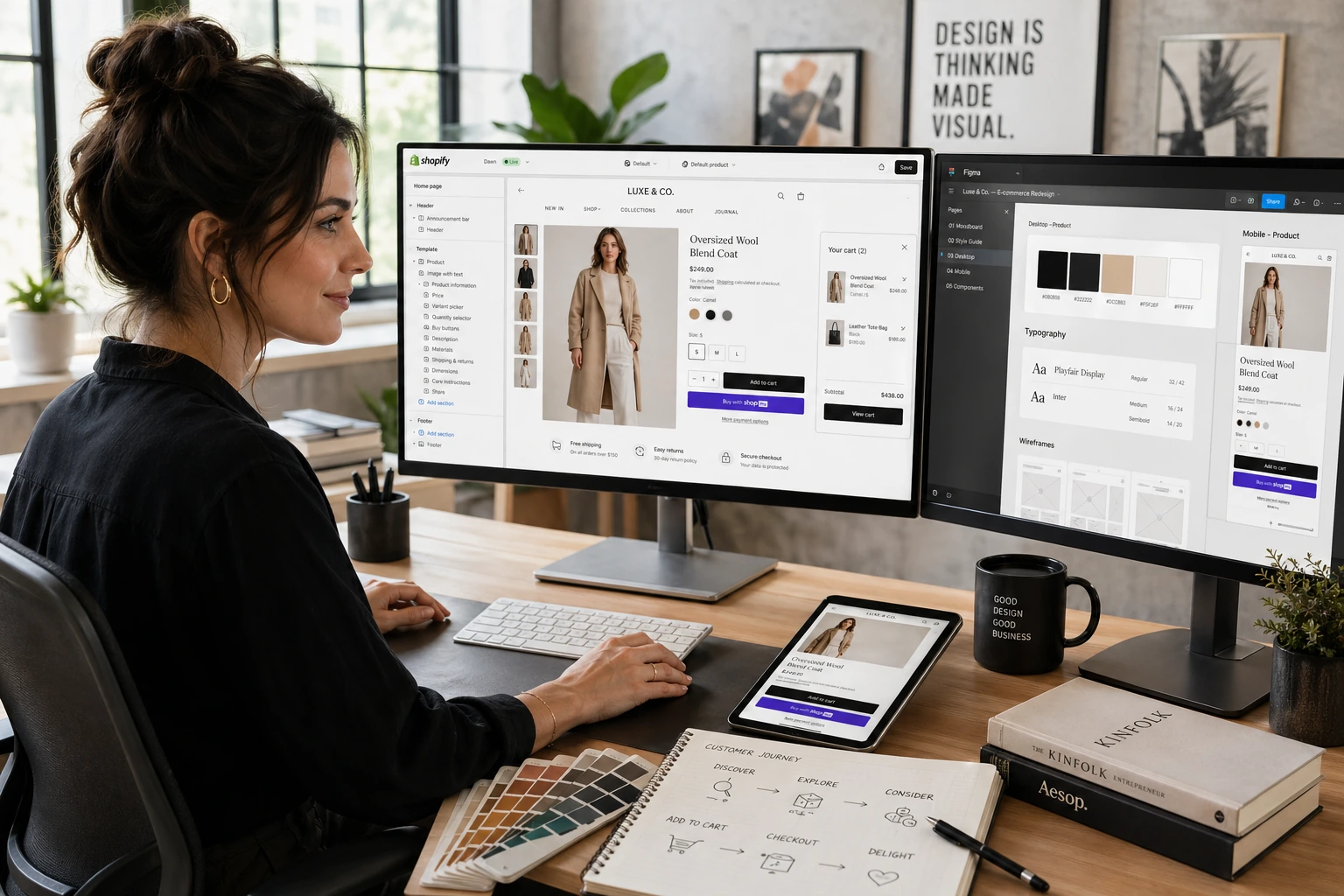
Running an online store means your website needs to do more than look good, because appearance alone doesn’t drive sales. It needs to convert visitors into buyers, handle payments smoothly, and give customers a reason to return.
To make this possible, the e-commerce platform provides built-in tools to sell products while still allowing designers to customise their website. As a result, you get the speed of a ready-made system without losing the unique look your business needs.
This guide explains what makes Shopify different from other e-commerce website builders, which design elements drive sales, and when to bring in professionals. By the end, you’ll know how to approach your e-commerce website project and avoid common mistakes that cost businesses thousands.
Other e-commerce solutions often force you to choose between speed and customisation. Instead, Shopify combines ready-made e-commerce functionality with design flexibility. It means you can launch your website faster without giving up control over how your store looks.
This balance becomes clearer when you look at the main areas where Shopify excels:
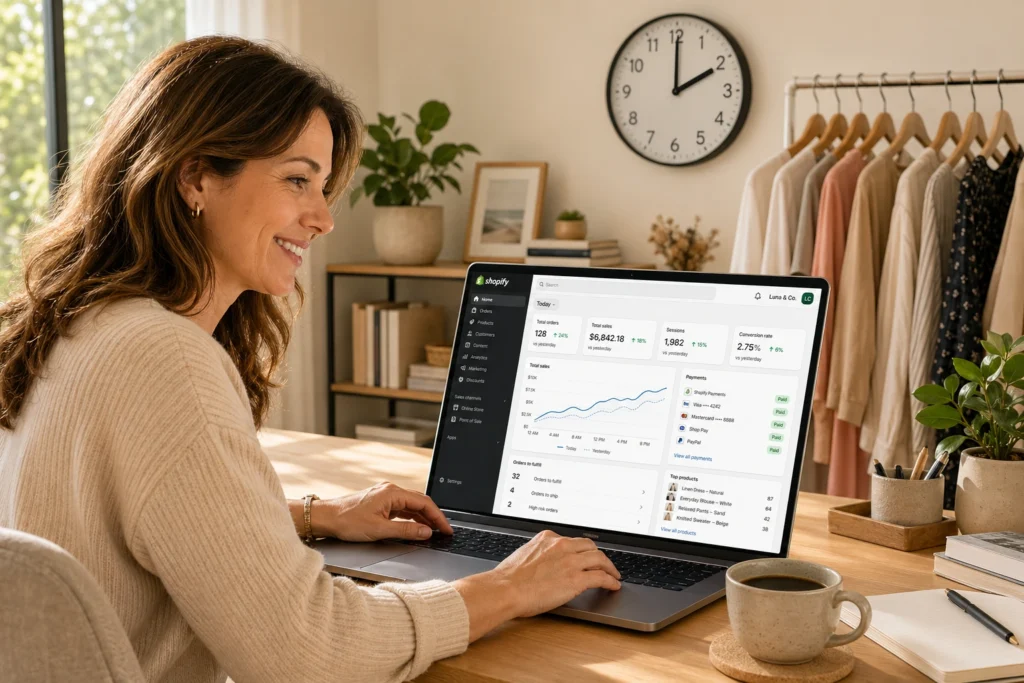
Shopify includes payment processing, inventory management, andshipping tools without requiring third-party plugins or custom coding. That setup removes the usual delays you see with other platforms like WordPress or Magento.
Instead, Shopify has a content management system that automatically handles product catalogues, customer accounts, and order tracking. So you can launch a functional platform in days instead of months without dealing with plugin conflicts or setup issues.
Shopify themes provide a foundation that designers customise to match your brand without building from scratch. That’s why custom e-commerce website design focuses on adjusting layouts, colours, and features that already work.
With this approach, you get professional design flexibility while keeping costs lower than fully custom e-commerce solutions. On top of that, small theme changes can completely change how your website looks and functions (and trust us, custom builds can cost five times more).
So how do you decide between themes and custom builds? Well, the choice here starts with your stage of growth and budget.
Generally, free and paid themes work well for small businesses testing the market or operating on tight budgets. Meanwhile, bespoke website design gives you unique branding and advanced functionality that themes can’t deliver.
In most cases, websites start with a theme and evolve with time. For example, a Shopify website might begin with a $200 theme and later shift into a fully customised e-commerce solution worth $20,000. This approach gives you control over when and how you invest in upgrades.
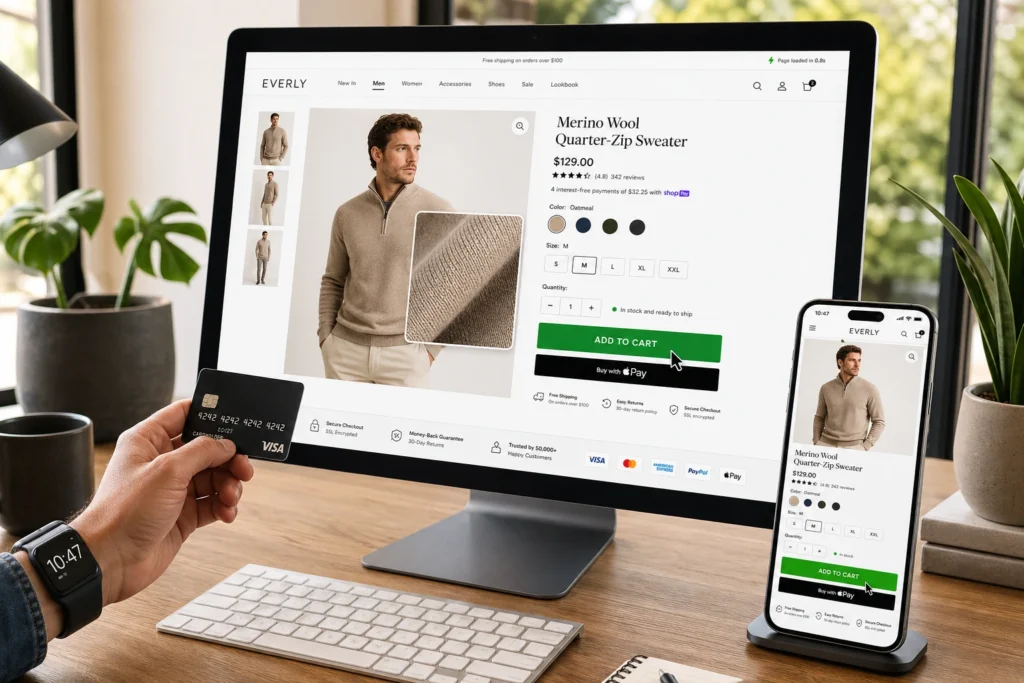
Shopify’s design elements work together to move visitors from the landing page to checkout without friction. And that flow often depends on how well different features align together.
Here are the six must-have features every e-commerce store needs:
In short, these elements combine to create a consistent customer experience from the first visit to the final purchase.
Large brands choose Shopify because it scales reliably, integrates with existing marketing tools, and handles enterprise-level traffic without breaking. These strengths become clearer when your business grows and demand increases.
To see how this plays out in practice, here’s what makes the platform reliable at scale:
| Feature | Why It’s Significant |
| Scalability | Supports growth from low to high order volume without needing platform changes. |
| Traffic Handling | The platform manages traffic spikes during sales events without crashing, which keeps online sales running during peak periods. |
| Digital Marketing Integration | Built-in apps and APIs connect to email campaigns and digital marketing services without custom development work. |
| Data Ownership | Gives you full control over customer data for better planning and decision-making. |
| Enterprise Security | Protects your site with regular updates while supporting stronger search visibility. |
In short, each of these features supports a different part of your ecommerce web setup, but together they always keep your website stable. Therefore, when demand increases, the platform continues to handle traffic, data, and security without forcing you to rebuild or switch systems.
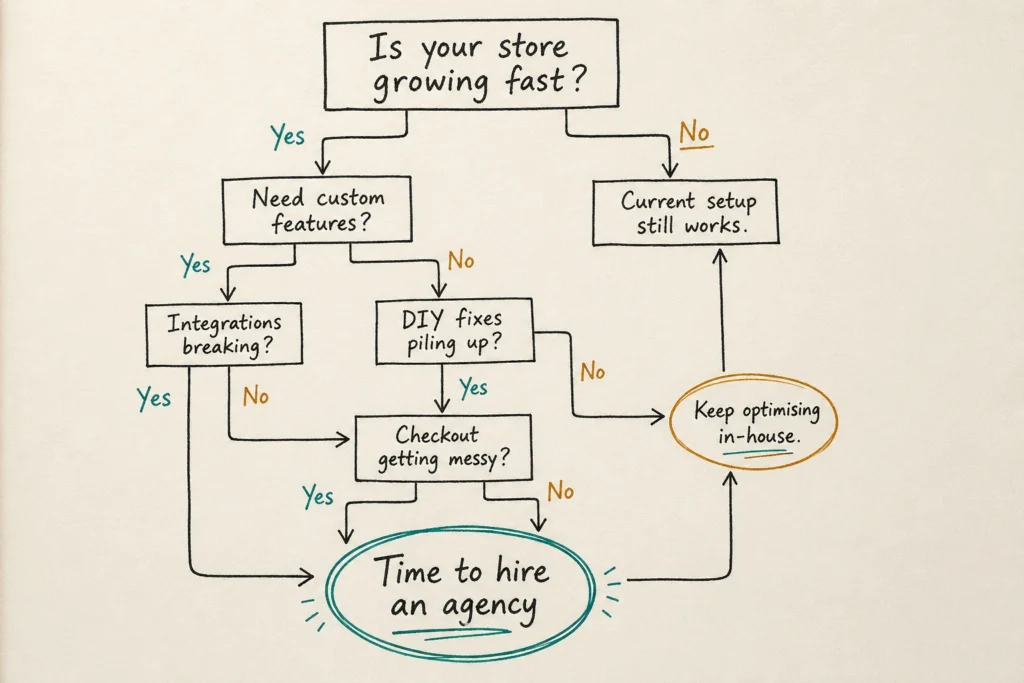
You should partner with an e-commerce agency when your Shopify store needs advanced functionality, reliable marketing integrations, or support to handle rapid growth. In fact, these are the points where managing everything on your own becomes difficult, and mistakes start to cost money.
After working with many e-commerce businesses in Brisbane, we’ve identified three clear situations where partnering with an e-commerce agency makes financial sense.
Some businesses need features like product configurators, subscription systems, or booking tools that standard themes can’t handle. In these cases, an e-commerce agency builds advanced functions while keeping your custom website fast and user-friendly.
However, that level of custom development requires more than basic website changes. It usually involves understanding Shopify’s platform, API integrations, and performance optimisation. Since most small teams don’t have that skill set in-house, external support is more practical for them.
Professional Shopify website designers connect your site to email marketing, CRM systems, and advertising platforms through proper API integration. They also set up tracking pixels, conversion goals, and analytics correctly so your digital marketing services actually show measurable results.
On top of that, such alignment between your e-commerce website development and digital strategy ensures every dollar spent drives real online revenue.
Without proper alignment, problems start to show quickly. For example, DIY integrations often break or miss important data, which leads to wasted ad spend and unreliable reporting. That’s why you need a proper setup and ongoing monitoring from experienced professionals.
Rapid growth often exposes weaknesses in your e-commerce website, which can start affecting conversions if left unchecked. In this situation, an e-commerce web designer helps you to identify issues early and fix them before they impact your potential customers.
This way, with the right e-commerce web design services, you can create design solutions that align with your business objectives and improve the overall customer experience.
Shopify website design combines the speed of ready-made tools with the flexibility your e-commerce website needs to be successful. The right approach converts browsers while keeping your site easy for customers to manage.
Professional e-commerce website builders handle the technical work when your business needs custom functionality. Getting these fundamentals right drives real revenue from your new website.
Ready to build a website that attracts repeat buyers? At DevelopersDex, we’ve helped Brisbane businesses create e-commerce websites that grow alongside their goals. Our team knows which design elements increase revenue and which ones waste your budget.
Company Reviews