

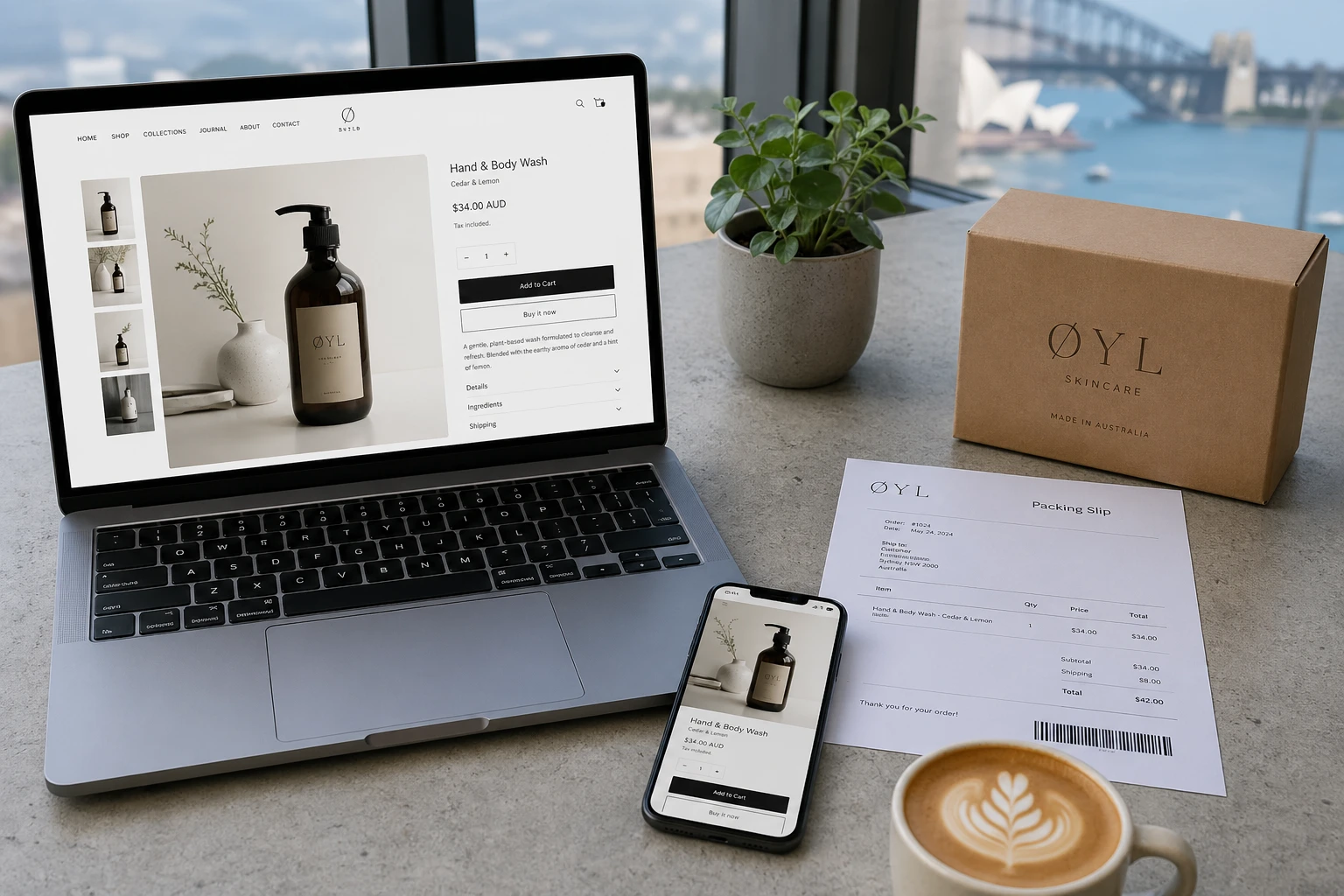
Most e-commerce websites convert only a small percentage of visitors into customers, with the majority leaving without making a purchase. In fact, nearly 70% of shoppers abandon their carts before checkout, often due to poor user experience or unclear buying paths.
Fortunately, most of these issues are fixable with the right design approach. Even small changes to navigation, product display, and checkout can have a noticeable impact on conversion rates for your e-commerce site.
This guide shows you how to build an e-commerce website that converts. You’ll learn how to structure product pages, streamline checkout flow, and optimise mobile performance. If you’re launching a new store or upgrading an existing one in Sydney, you’ll be able to make better design decisions from day one.
Let’s get into it.
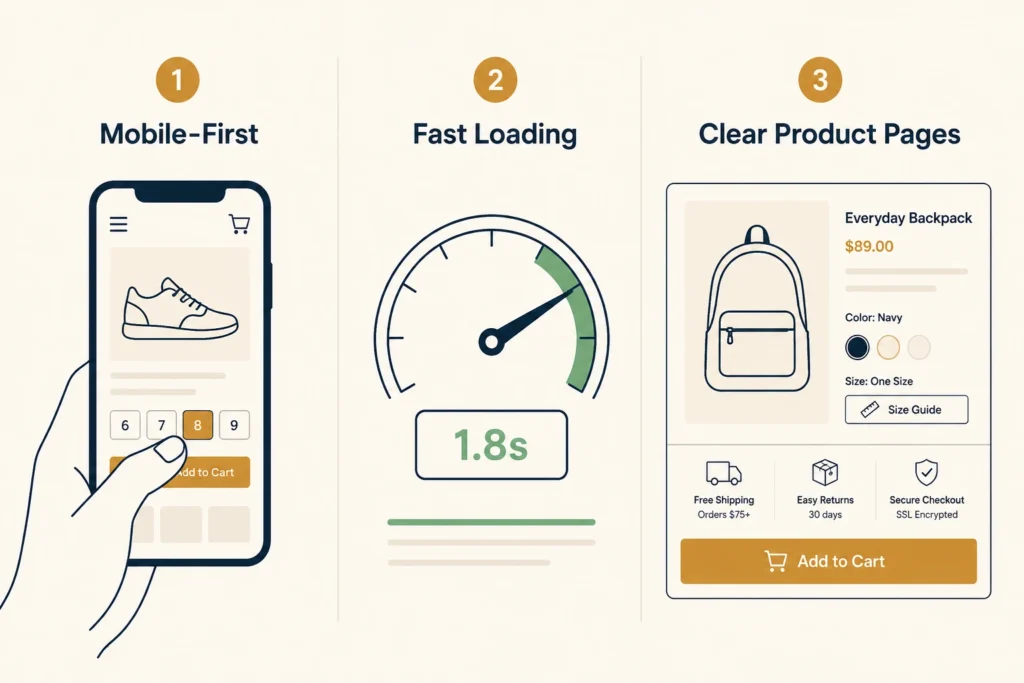
Three fundamentals determine whether browsers complete purchases: mobile-responsive layouts, fast loading times, and clear product pages. Let’s see how each one works.
Mobile accounts for 59% of all web traffic in Australia as of March 2026, meaning most customers are shopping on phones. To keep them engaged, your site needs to be mobile-first. That means using touch-friendly buttons, readable text without zooming, and thumb-reach navigation that helps shoppers move through checkout instead of abandoning halfway.
Pro Tip: Test on actual phones because desktop previews miss what breaks on smaller screens.
The slower your site loads, the more likely visitors are to leave. Google research shows that 53% of mobile users abandon pages that take longer than three seconds to load. You can improve site speed by optimising images, reducing unnecessary scripts, and limiting heavy files. Fast loading also helps with search engine rankings, so it’s a win for both user experience and e-commerce SEO (Search Engine Optimisation).
Product pages convert better when they answer shopper questions upfront. For example, we worked with a fashion retailer whose product pages originally used only basic stock images and minimal detail.
After adding close-up shots of fabric texture, fit guides, and customer photos, their conversion rate jumped by 28%. Shoppers could finally judge quality and fit the way they would in a physical store, without the guesswork that was holding them back.
The platform you choose determines how much control you have, what features you can add, and how much you’ll spend monthly. Each option suits different needs and budgets.
For example, Shopify offers quick setup and built-in hosting, which makes it ideal for small to medium-sized Sydney businesses launching their first e-commerce store. You get a functioning site fast, but you’re limited to what the platform allows.
Alternatively, WooCommerce gives you complete control through WordPress. If you need custom e-commerce features or complex integrations, it’s a stronger choice. The trade-off is that you’ll need more technical knowledge to manage it properly. That’s why many growing businesses bring in e-commerce web development specialists to handle the technical side.
For businesses needing full flexibility, custom-built solutions cost more upfront but deliver what your store needs without platform limitations or monthly subscription fees.
If you’re not sure which to pick, start with the simplest option that meets your current needs. You can always upgrade as your business grows.
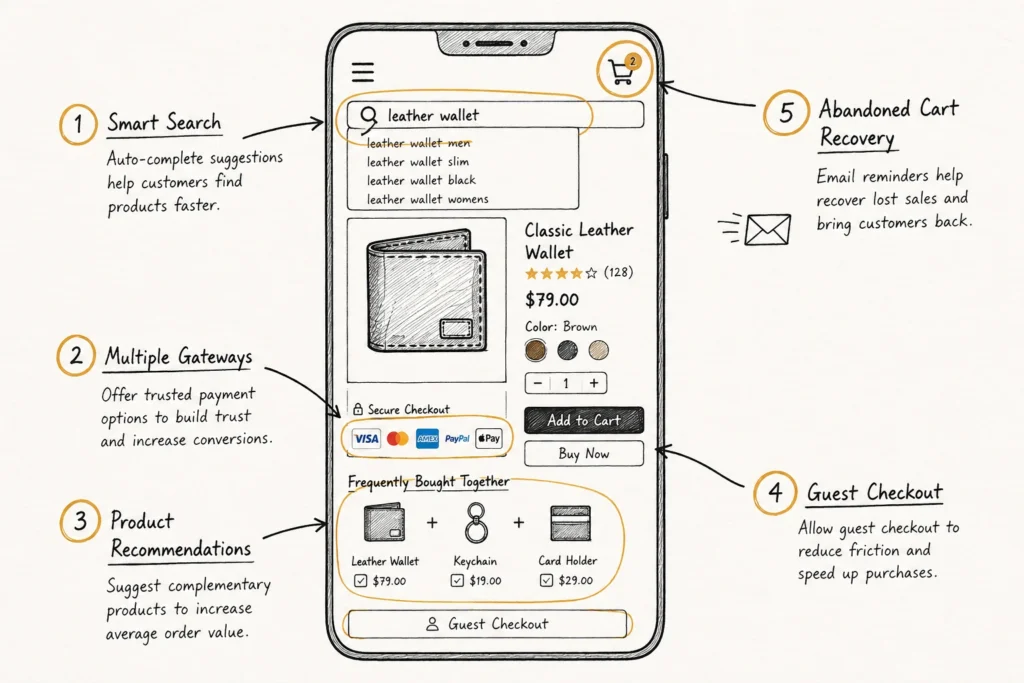
The features worth building into your e-commerce store are the ones that remove obstacles between browsing and buying. These do that most effectively:
We recommend focusing on features that remove obstacles rather than adding complexity. The goal is a smooth shopping experience that guides customers through checkout without friction.
Template platforms promise quick setup, but choosing the right approach comes down to how much time, control, and flexibility you actually need. Here’s how DIY builders compare with professional web development:
| Aspect | DIY Approach | Professional Approach |
| Cost | Lower upfront investment | Higher initial cost |
| Control | Full control over decisions | Expert guidance throughout |
| Timeline | Slower launch as you learn | Faster time to market |
| Limitations | Bound by template constraints | Custom e-commerce solutions |
| Support | You handle all updates | Ongoing support included |
DIY works for simple online stores with small product ranges, but it often becomes harder to scale as your business grows. While it offers a lower upfront cost, limitations in design, integrations, and support can lead to higher expenses later when upgrades are needed.
Professional e-commerce website developers, on the other hand, build a more scalable foundation from day one. They provide custom design and integrations, plus ongoing support for updates, security, and performance. This lets you focus on running your business instead of troubleshooting technical issues.
Our Recommendation: Choose DIY for testing ideas with a small catalogue. If you’re planning to scale, professional e-commerce web design services save you time and money in the long run.
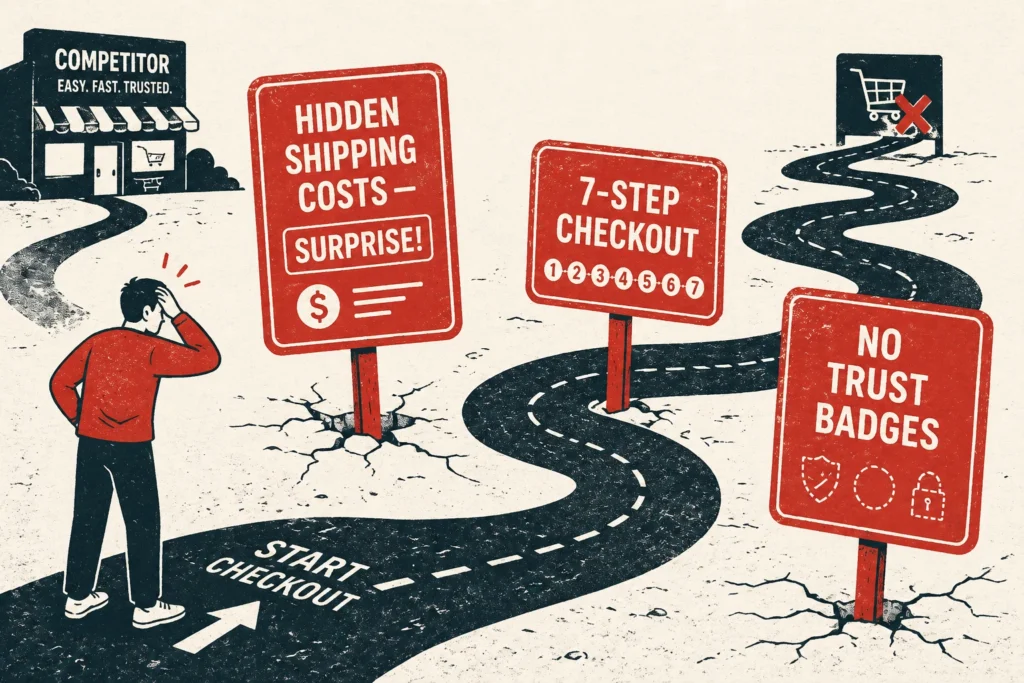
Even if your store looks professional, hidden usability and performance issues can push ready-to-buy customers toward competitors. In most cases, this comes down to a few common conversion killers:
A good e-commerce website removes these obstacles systematically. That’s why regular audits are essential for maintaining strong conversion rates and growth.
Once your e-commerce website is live, ongoing support helps keep it performing as your product range grows, platforms update, and customer expectations evolve.
That’s why many Sydney e-commerce agencies offer maintenance services covering security updates, performance monitoring, and content changes. For business owners without an in-house development team, this support helps resolve technical issues quickly before they impact sales.
As your store grows, support should go beyond maintenance to help you scale what already works, including inventory management, payment integrations, and marketing tools. This is most effective when your site is built with scalability in mind from the start.
In the long run, the most successful e-commerce stores aren’t defined by budget alone, but by consistent improvements to the customer experience after launch.
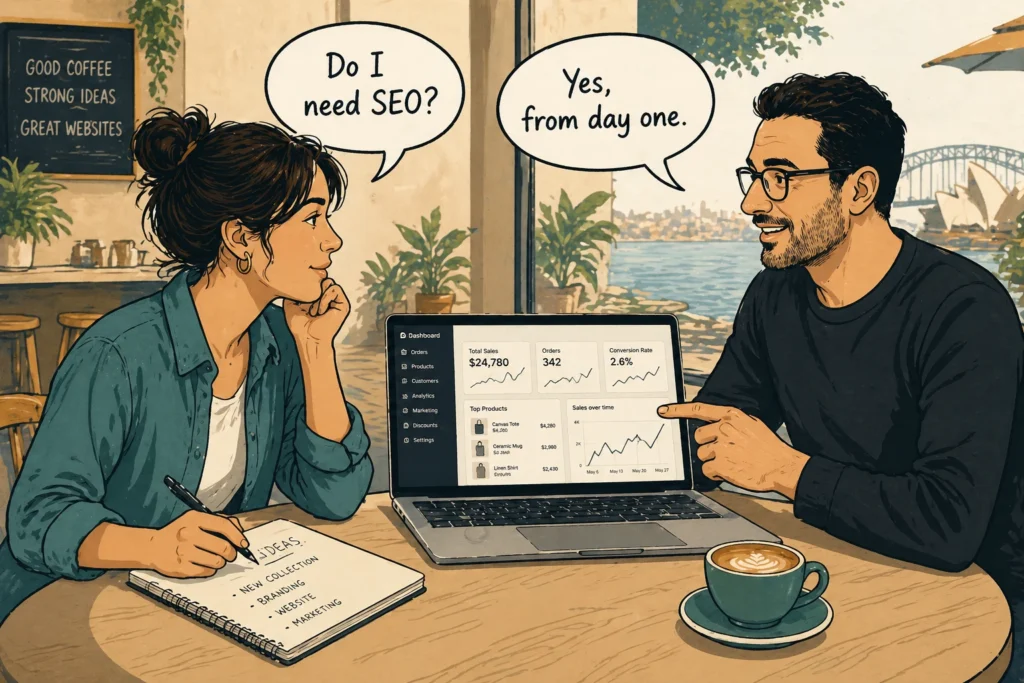
Planning an online store involves a series of key decisions that shape how the site looks, functions, and performs. Below are some of the most common e-commerce design and development questions businesses ask.
Yes. e-commerce SEO makes it easier for customers to discover your store through search engines when they’re ready to buy. It includes optimising product pages, improving site speed, and targeting search terms related to your products. Most successful e-commerce stores build SEO into their website from the start to attract consistent organic traffic.
E-commerce web design in Sydney varies depending on complexity, features, and customisation needs. Simple template-based stores might cost a few thousand dollars, while custom solutions with advanced features can cost significantly more. Most local agencies offer different packages to suit various budgets and business stages.
You don’t need a massive marketing budget to convert browsers into buyers. Start with mobile-first layouts since most Australian shoppers browse on phones. From there, choose a platform that matches your current needs while allowing room to grow. Then add features like guest checkout, clear shipping costs, and trust signals that make purchasing feel simple.
And if you’re stuck or need help, an experienced e-commerce design team can help you avoid common mistakes and build a scalable site. At DevelopersDex, we provide web design packages for Brisbane businesses looking for professional e-commerce solutions and ongoing support.
Ready to build a store that converts? Get in touch with our team.
Company Reviews