

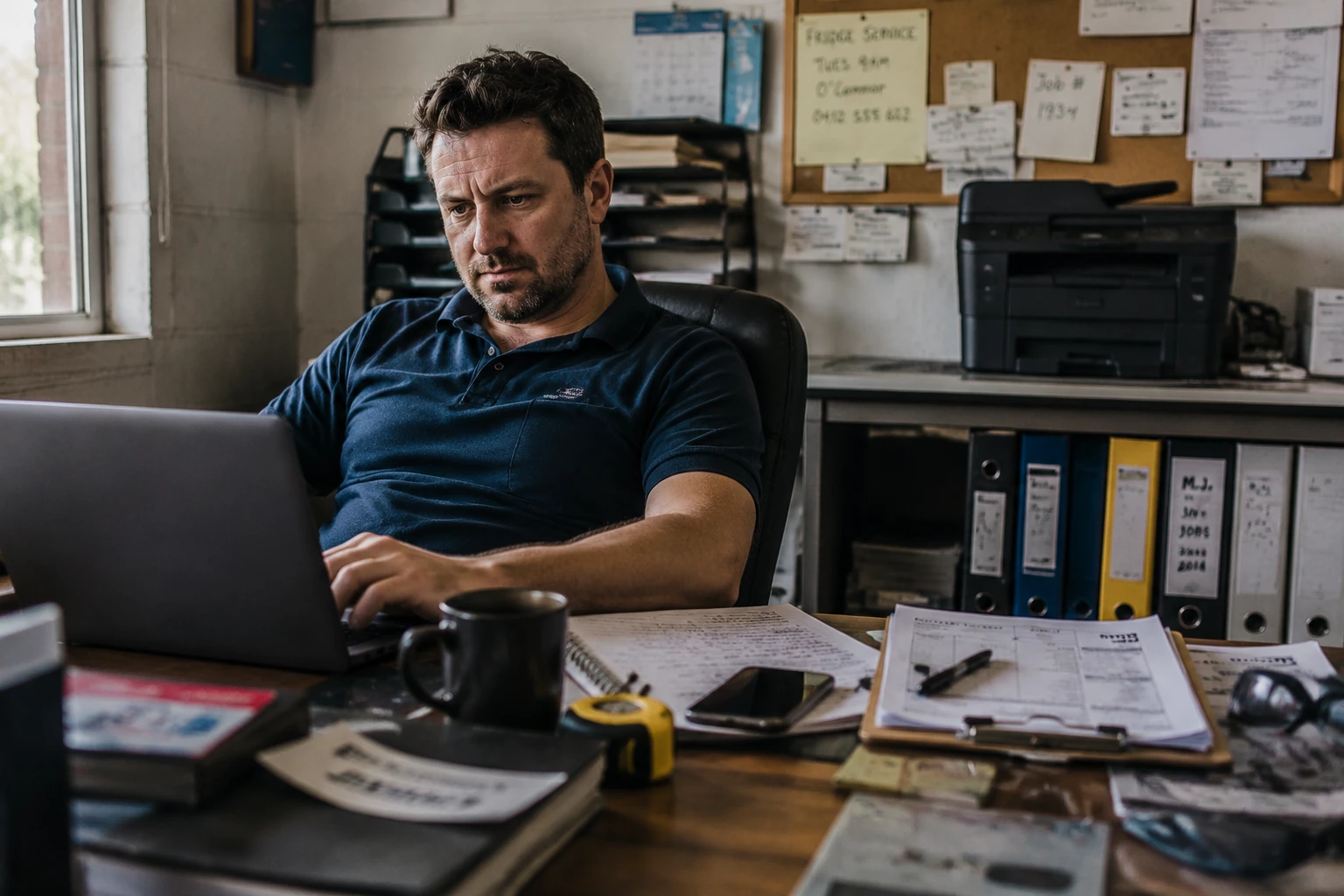
Most small business owners assume a website will bring enquiries in on its own. Then three months pass, the hosting bill arrives again, and the phone hasn’t rung once.
The frustrating part is that the site looks fine on the outside. It has the services listed, a contact number, and it loads on a phone. But visitors land and leave without doing anything, usually because they can’t work out what you do or what to do next.
That disconnect is a web design problem, and it’s exactly what this guide addresses. You’ll learn what separates a site that generates enquiries from one that doesn’t, and how to act on it.
But before we get into the solutions, let’s look at why your small business website might not be generating enquiries right now.
Most small business websites struggle to generate enquiries because the design prioritises looks over visitor behaviour.
A site can have professional photos, a clean layout, and a full list of services, and still produce nothing. Take a landscaping company with a beautiful homepage slider and a services page listing “garden design, irrigation, and maintenance.” It looks polished, but a potential customer still has to guess the cost, the service area, and how quickly someone will respond.
When a website leaves important questions unanswered, visitors rarely stop to investigate further. They leave and contact someone else instead.
Visitors need two things before they’ll contact you: confidence that you can help them, and a clear path to do it. We’ll break them down below.
The first thing a visitor does on any site is scan for relevance. They want to know quickly (usually within seconds) whether your business solves their problem. If they land on a generic tagline or vague service descriptions, that question goes unanswered.
One of the best ways to answer it is through specific, direct website content that matches what potential customers are actually looking for.
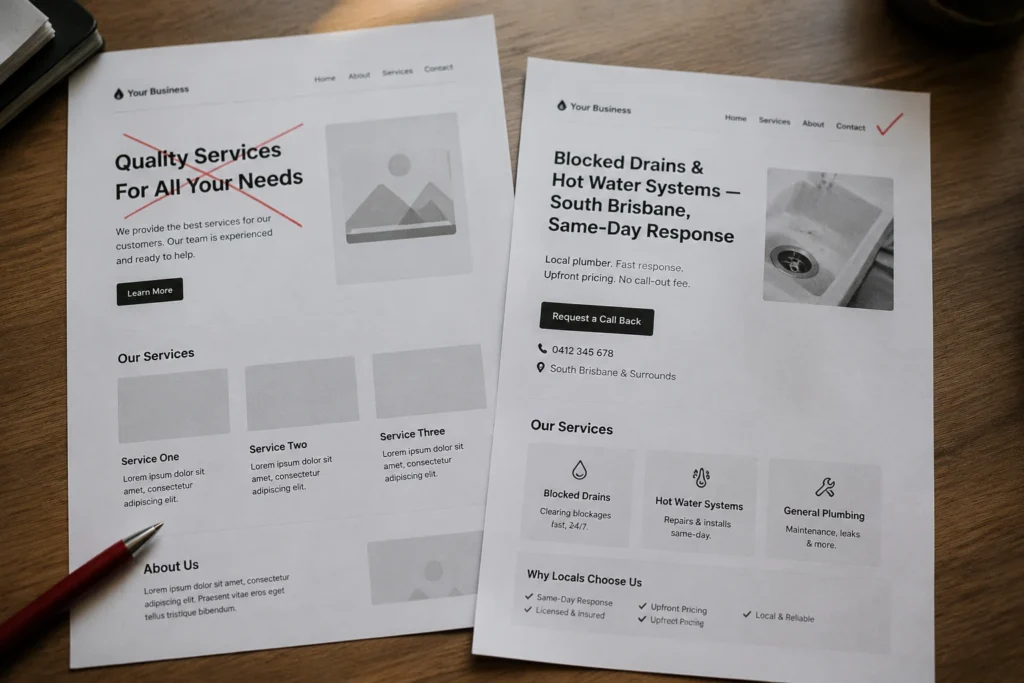
Take two plumbers in Brisbane. One homepage reads “quality plumbing services for all your needs.” The other lists “blocked drains, hot water systems, and emergency callouts across South Brisbane, with same-day response.” If you needed a plumber right now, which one would you call? Almost certainly the second.
The more clearly your site explains who you help and what you do, the easier it becomes for visitors to recognise they’re in the right place. When that answer is obvious, contacting your business becomes a much easier decision.
Even if your messaging is crystal clear, someone who’s ready to enquire can still leave if the contact path isn’t obvious.
That might mean a contact page buried in the navigation, a phone number hidden in the footer, or a call to action that’s difficult to spot. When people have to search for a way to get in touch, the process immediately becomes harder than it needs to be.
The problem gets worse when contact forms ask for too much information or mobile users can’t tap a phone number to call directly. Each extra step creates friction, and friction is often enough to stop an enquiry before it happens.
User-friendly contact options fix that. A short contact form, a visible click-to-call button, and a clear call to action in the right place make it much easier for visitors to get in touch. In fact, we’ve seen small business clients increase their enquiry rate by around 10% simply by making their contact options more visible and simpler to find.
A question we hear often is “how do I design a good web page that actually brings in leads?” While every business is different, the strongest-performing pages usually share a few important elements.
Together, these elements create a website that’s easier to find, easier to trust, and easier to contact. That’s what effective web design for small businesses is built to do.
Last week, a plumber from Toowong called us. He’d spent months building his own site and wanted web design for tradies that actually brought in job requests.
His site wasn’t badly designed. It had a content management system he could update himself, decent photos, and a service list. However, it wasn’t appearing in local search results, the contact form was hard to find, and he hadn’t received a single enquiry in two months.
That’s the gap DIY platforms don’t tell you about. Platforms like Squarespace and Wix are a cost-effective way to get a small business online quickly. And for some companies in the very early stages, it’s a reasonable starting point.
But they can only go so far. Template sites often lack the SEO structure, page speed optimisation, and conversion features that a small business website needs to generate consistent enquiries.
Professional web designers don’t have those limitations. They build sites with structured page layouts, SEO integrated from the start, and contact options designed around how your customers actually reach out. You get a site that works while you focus on running things.
The only drawback is the upfront cost. For many small business owners, though, that investment is outweighed by the enquiries a well-built site consistently brings in. And a professionally built site pays for itself far sooner than a DIY build ever does.
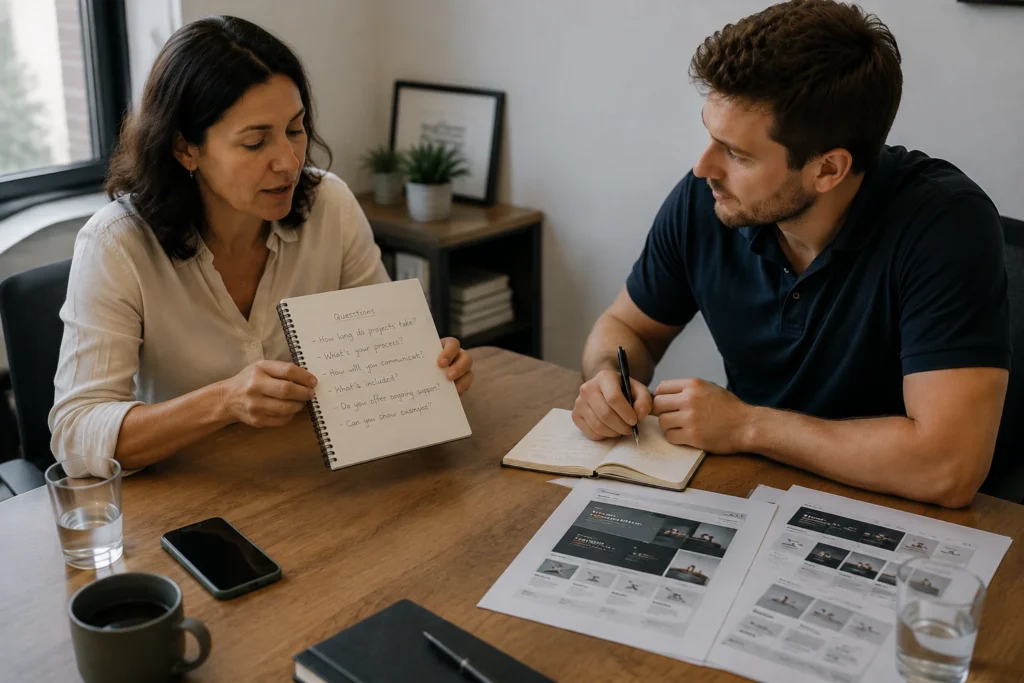
What separates a website that generates enquiries from one that doesn’t is largely who built it and how they approached the brief. The challenge for business owners is identifying which designers understand how to build for enquiries rather than appearances alone. The two areas below can help you make that distinction.
A good agency will have a portfolio spanning multiple industries, including web design for NDIS providers, retail, and trade businesses. That versatility shows they can adapt their approach to different audiences and aren’t locked into a single style or template.
Local knowledge is just as important. An agency familiar with your market understands how your customers search and which design decisions will resonate with them. This is something a generic offshore provider rarely brings to the table.
Beyond the portfolio, they should also be able to show proven results. That means real examples of work backed by measurable improvements in enquiries or search rankings.
An agency that treats search engine optimisation and conversion as afterthoughts will deliver a site that looks polished but struggles to generate leads. The right agency avoids that trap by building SEO strategies into the process from day one. And it starts with a site structure search engines can actually read and index properly.
From there, individual pages need to target the terms your potential customers are actually searching for. A plumber in Brisbane, for instance, will typically get more enquiries from “emergency plumber Brisbane northside” than from a generic “plumbing services” page.
And they should design the layout to guide visitors toward contacting you rather than just inform them.
You can get a clear sense of this by asking a few questions upfront:
A web design agency with genuine technical expertise will explain their process with specifics, including how they plan pages, track search visibility, and measure results.
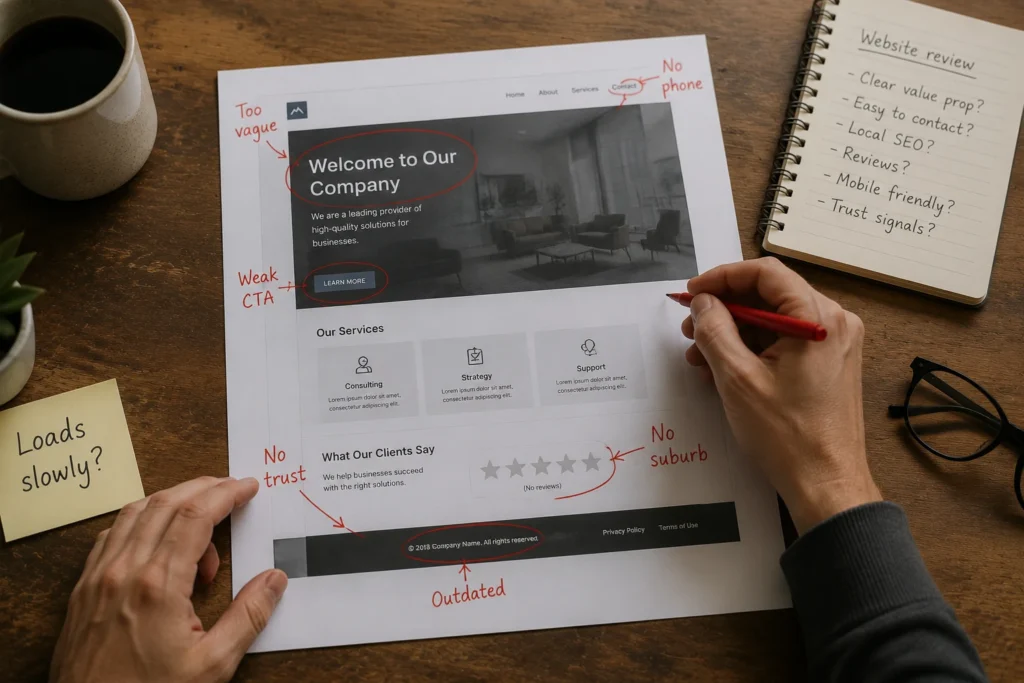
Picture a tradie who’s ranking on page one for “electrician Chermside” and getting 200 visits a month, but only two enquiries. The traffic is doing its job. Something on the site itself is turning people away before they reach the contact form. Here are three things worth checking on your current website.
If two or more of these apply to your current website, it’s worth having a professional take a look. Often, the most meaningful improvements come from addressing the specific elements that are stopping visitors from enquiring.
By now, you have a clearer picture of what’s stopping your website from generating enquiries. In most cases, the issue comes down to how the site was built.
Fortunately, those issues are fixable. You just need a site with clear messaging, a readable structure, and contact options that remove friction for potential customers. That’s what DevelopersDex focuses on for every small business website we build across Brisbane.
If your current site isn’t performing as it should, reach out to us for a no-pressure conversation about improving your online presence.
Company Reviews