


Most people assume a website is finished once it’s launched. You paid for the design, the pages went live, and that felt like the end of the project. But websites aren’t static. Software changes, threats evolve, and small issues build up over time. Before long, you’re dealing with plugin conflicts, slower pages, or security issues.
That’s what a website care plan is for. It’s an ongoing service that keeps your site secure, fast, and reliable. The goal is to catch problems before they affect your business and the people visiting your site.
In this article, we’ll walk through what’s included in a care plan and what tends to go wrong without one. We’ll also compare it with handling maintenance yourself and explain what you should expect to pay.
Let’s dive in.
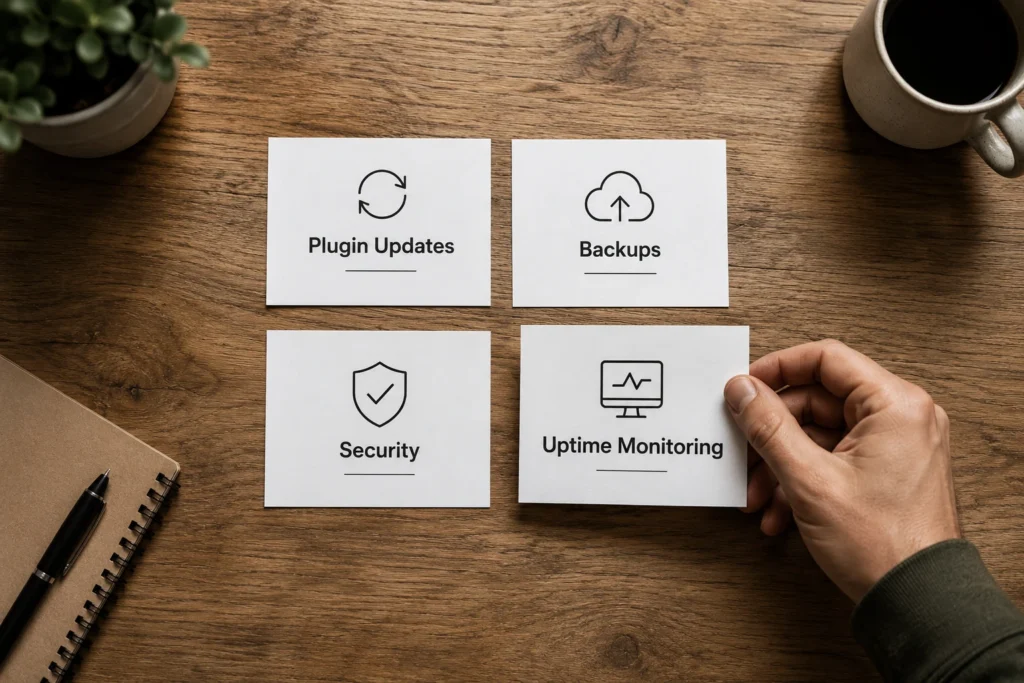
A website care plan is an ongoing service that handles the routine, behind-the-scenes work a website needs to stay secure and functional. That includes software updates, backups, uptime checks, and minor fixes when something stops working correctly.
It’s easy to think your web host already does this. Hosting keeps your site online and accessible, but doesn’t update your plugins, scan for malware, or fix a broken contact form. Those tasks fall outside what hosting providers cover, and they’re exactly what a care plan is built to handle.
From what we’ve seen, most site owners don’t realise this gap exists until something goes wrong. A plugin stops being supported, a security patch gets missed, and suddenly a small oversight becomes a much bigger repair job.
Care plans vary by provider, but most cover three core areas: security, performance, and content upkeep. Below, we explore them in more detail.
This is usually the foundation of any care plan. It includes regular malware scans, firewall monitoring, and SSL certificate renewals, all aimed at catching threats before they cause damage. Together, this work is often referred to as website security maintenance, and it’s one of the main reasons businesses sign up for a plan in the first place.
Backups work alongside security as a safety net. If something does go wrong (a hack, a bad update, or human error), a recent backup means your developer can restore the site instead of rebuilding it from scratch.

Uptime monitoring checks that your site stays online and accessible. Even a short outage can cost you customers who simply give up and leave.
Performance optimisation covers the other half of this work. It includes load speed, broken links, and oversized images. These small delays directly affect how users behave on a site.
In fact, according to Google Research, 53% of visits are abandoned if a page takes longer than three seconds to load (that’s a lot).
Every website runs on some kind of underlying software, and that software needs regular updates to stay compatible and secure. If you’re using WordPress, that means keeping the core platform, themes, and plugins up to date, as new releases come out frequently.
Skipping those updates can create problems over time. One common example is an outdated plugin. It might seem harmless, but it can introduce security vulnerabilities or leave features like contact forms open to spam and other issues.
This type of maintenance can also include smaller content updates, like fixing broken links, replacing old images, or refreshing outdated information on existing pages.
Skipping maintenance doesn’t usually cause an immediate problem. The damage builds slowly, which is part of why it’s easy to ignore.
In many cases, it starts with small things that seem harmless. Maybe a plugin goes unpatched for months, or a backup that should be running weekly suddenly stops working. None of this looks urgent until the day your site goes down, gets flagged by Google for security issues, or loses functionality during checkout.
Over time, neglected websites often experience:
Staying on top of updates, backups, and performance checks is almost always cheaper than recovering from a major outage or security incident.
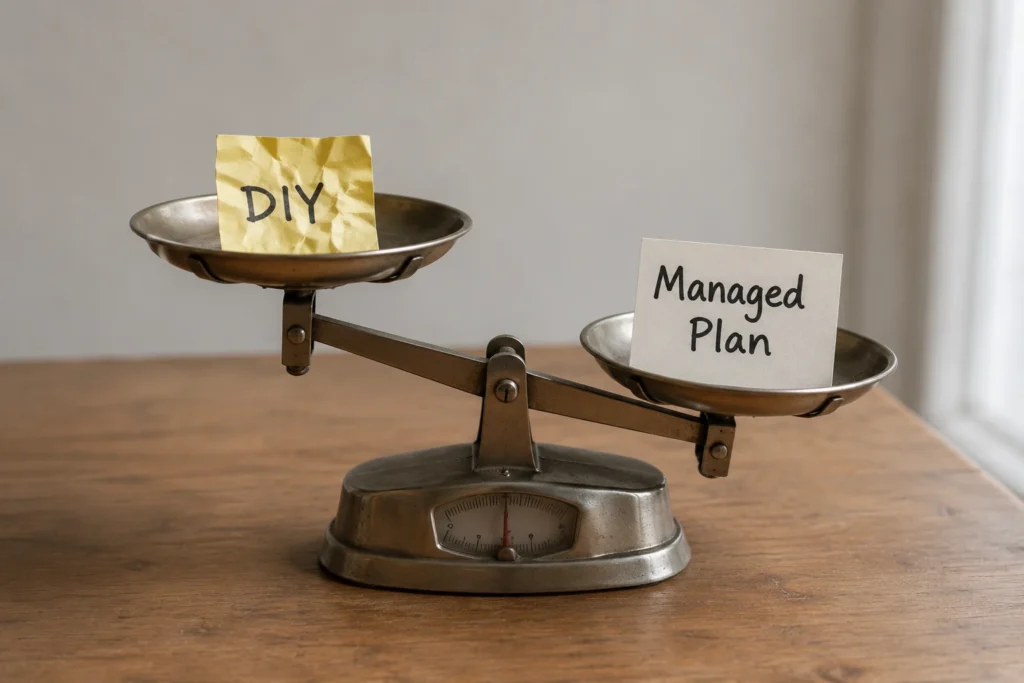
A managed care plan suits business owners who’d rather not think about maintenance at all. By contrast, DIY suits those with the time and technical knowledge to handle it themselves.
A few ways the two approaches differ:
If your site is simple and you genuinely enjoy the technical side, DIY can work. Once your WordPress website care involves multiple plugins, integrations, and regular updates, managed support reduces the risk of something slipping through the cracks.
For many businesses, the time saved by outsourcing maintenance is worth far more than the cost of the plan itself.
Pricing depends on how complex your site is and what’s included in the plan. If you run a simple five-page business website, you probably don’t need extensive support.
A basic plan that covers updates, backups, and security checks may be all you need, which typically costs between $50 and $100 per month.
An e-commerce site is a different story. Online stores usually require more frequent backups, performance monitoring, security checks, and faster response times when something goes wrong. Those extra requirements can push costs to $300, $500, or more per month, especially if hands-on support is included.
Quick Tip: When comparing plans, look beyond the monthly price and check exactly what’s covered. Two providers may offer a similar rate while including very different levels of service.
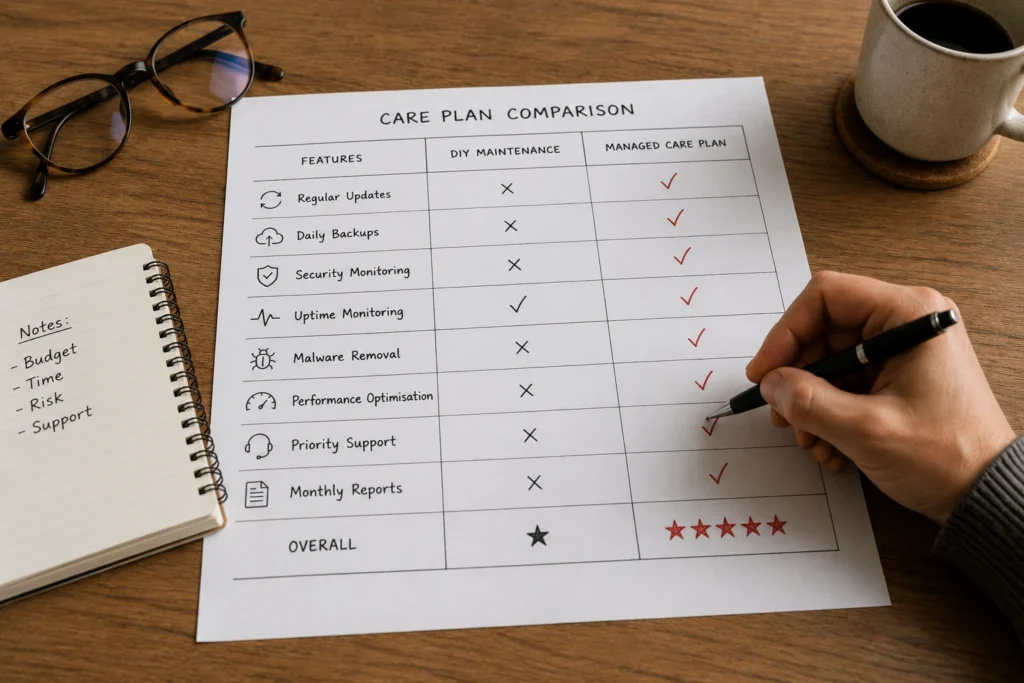
Picking the right care plan comes down to matching the support level to what your website actually needs. A simple brochure site and a busy online store don’t need the same level of attention, so the best plan is the one that fits your situation. To help you decide, ask yourself the following questions:
A good provider should be able to answer these clearly, without vague language like “comprehensive support” that doesn’t explain what you’re getting. If a plan can’t tell you specifically what’s included, that’s usually a sign to keep looking.
A website isn’t something you finish once and forget about. It needs the same kind of ongoing attention as anything else that supports your business, like your equipment, inventory, or physical storefront.
A solid care plan handles that work in the background, so small issues are resolved before they escalate. The result is a site that stays secure, fast, and dependable for as long as you’re running it.
If you’re ready to stop worrying about plugin updates, backups, and security checks, DevelopersDex offers website care plans built around exactly that. Get in touch with our team to find a plan that fits your site.
Company Reviews