
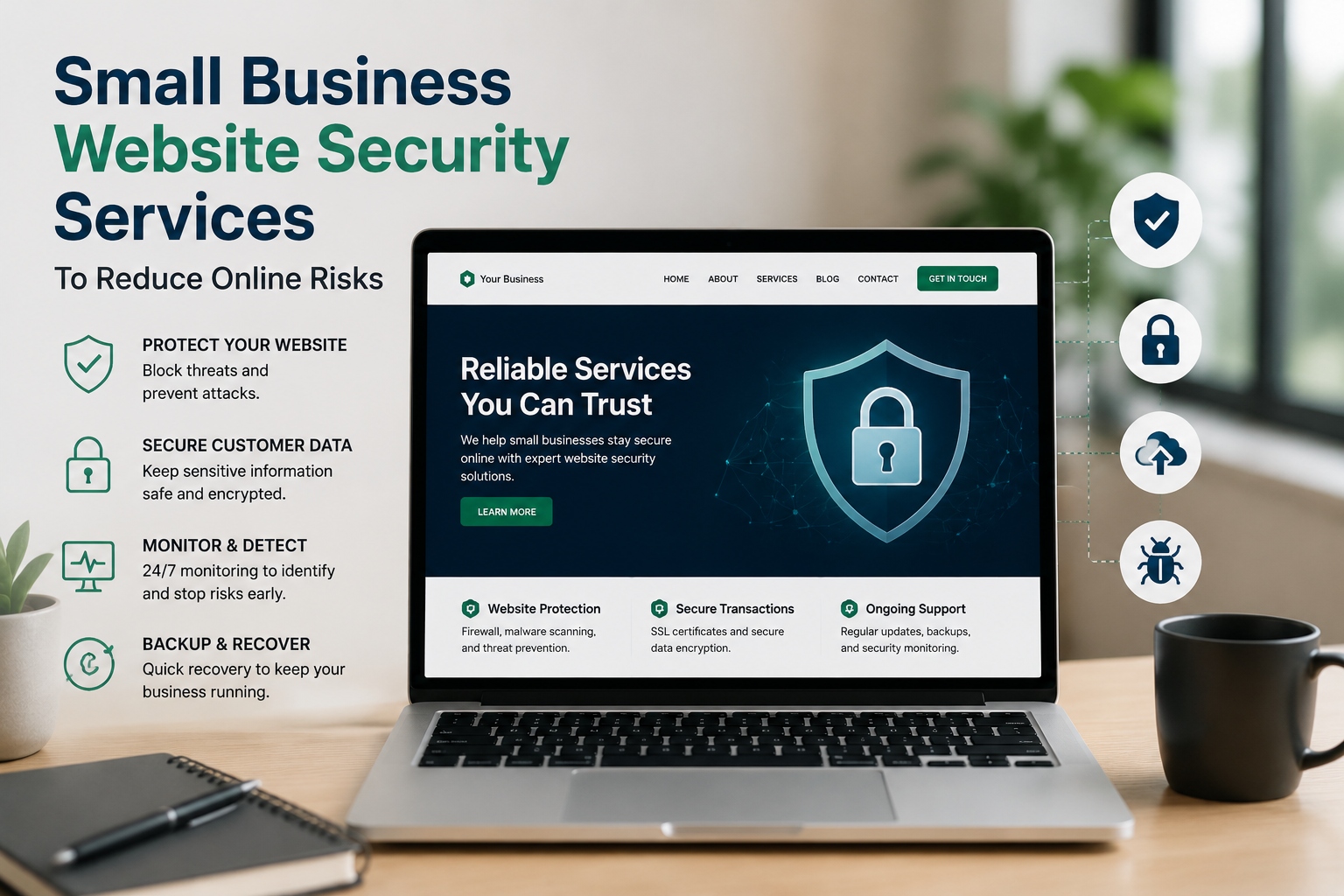
If you run a small business, website security probably isn’t the first thing on your mind. You’re focused on customers, cash flow, and keeping things running. But cyber threats don’t wait until you’re ready.
According to the Australian Signals Directorate’s Annual Cyber Threat Report 2023–24, a single cyber attack costs the average small business $49,600 in direct losses. That’s why we’ve put this guide together, so you can spot the risks early and act before they become costly problems.
In this article, we’ll cover:
Read on to find out what’s putting your site at risk and what you can do about it.
Cyber criminals target small business websites because they’re easier to breach than large organisations. Yet they still hold valuable customer data, payment details, and confidential information worth stealing.
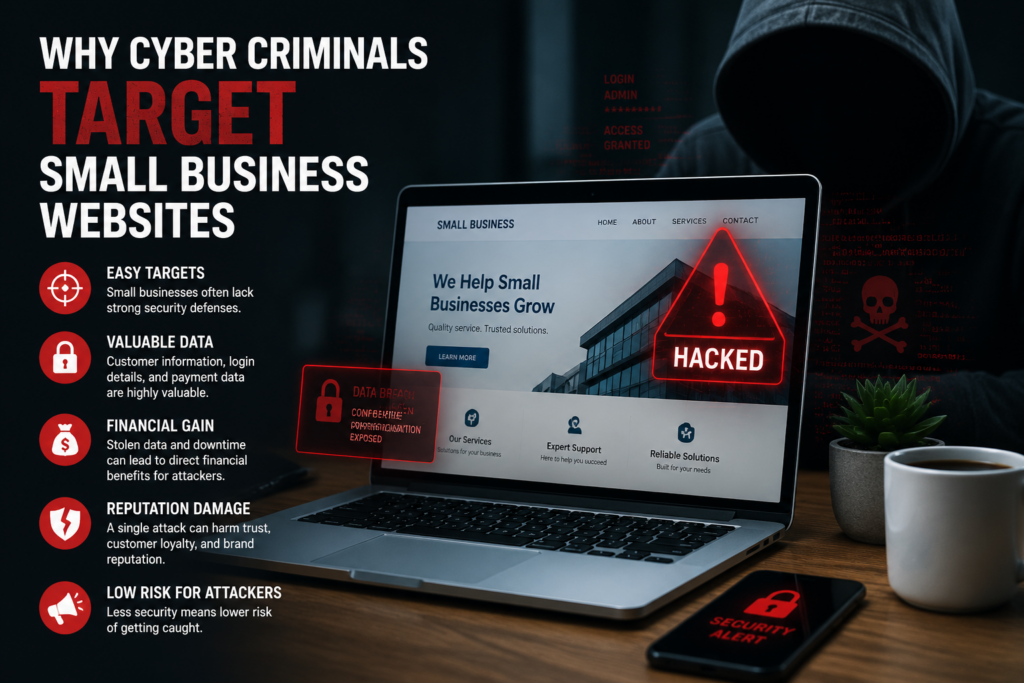
For the most part, a lot of small business owners assume size offers some kind of protection. In reality, it doesn’t. Because automated bots scan millions of websites simultaneously, probing for weak points around the clock.
These bots don’t care whether you’re a retailer in Fortitude Valley or a consultancy in Spring Hill. They’re looking for the easiest door to open, and an unprotected site gives them exactly that.
Meanwhile, larger organisations typically invest heavily in cybersecurity. Small businesses, by contrast, often skip the basics. Weak passwords, outdated software, and poor access controls give cyber criminals an opening to exploit vulnerabilities without much effort at all.
And the fallout? The damage extends far beyond the invoice you’ll receive after a breach. Sensitive data built up over years, including customer information, account details, and core business data, can be exposed in minutes.
One compromised plugin on a WordPress site is genuinely all it takes. From there, the legal consequences follow quickly, and the reputational damage tends to linger long after the bills are paid.
Honestly, data breaches erode the customer trust you’ve worked hard to build, and that’s often far harder to recover than the money itself.
Do you know what online threats are quietly working against your business website right now? From malware infections to brute force attacks, cyber criminals use at least five methods to target small business websites every day.
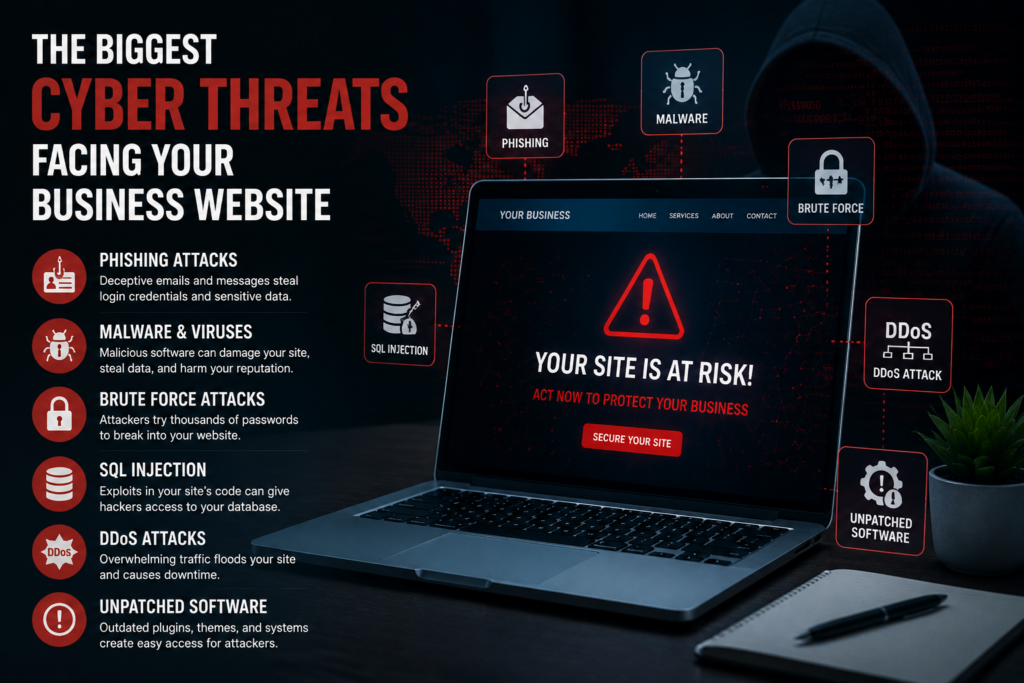
Here’s what to watch for:
Taken together, these cyber threats paint a clear picture. No business website is too small to be targeted, and each of these attack types exploits vulnerabilities that proper website security measures can address. The question is whether you’ve addressed them yet.
Most small business website security issues come down to a handful of overlooked areas, ranging from how your site is maintained to who has access to it. Addressing these areas gives your business a solid foundation against the most common cyber threats.
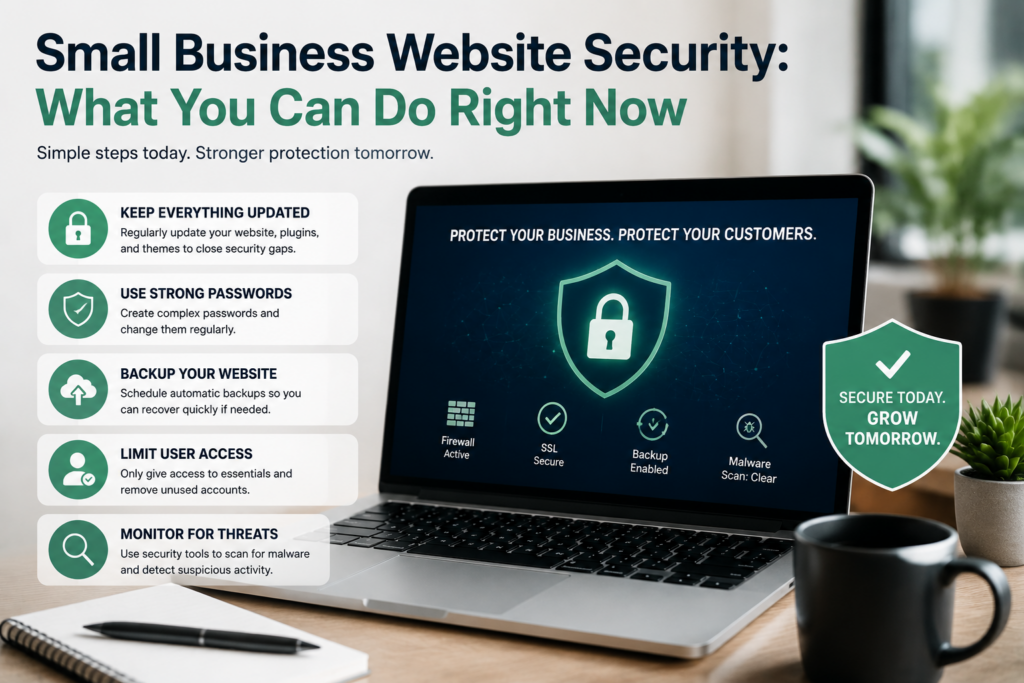
Let’s walk through the six most important website security checks.
A website security audit identifies potential vulnerabilities before cyber criminals find them first. Think of it as a health check for your website. It flags outdated software, weak access points and surfaces any malicious code sitting undetected in your files. From there, you get a clear picture of where your security needs the most attention.
Not every staff member needs full access to your website’s backend. Applying the principle of least privilege means assigning user roles based on what each person actually needs.
Make a habit of reviewing who has access regularly, revoke access from former employees immediately, and keep admin accounts to a minimum. The wrong person in the wrong area of your site can cause serious damage, intentionally or not.
Every time you delay a software update on your WordPress sites, you’re leaving a known vulnerability open. Enable automatic updates where possible, and confirm your web host offers regular automatic backups so you can restore quickly if something goes wrong.
Through our experience working with Brisbane small businesses, we’ve seen how easy it is for security issues to go unnoticed without regular monitoring in place. Ongoing website security maintenance covers security scanning and performance checks. It also picks up suspicious activity early, well before it escalates into a costly cyber attack.
Unique passwords combined with two-factor authentication add 2 layers of protection to your admin accounts. Strong password management makes it significantly harder for attackers to gain entry, even if one credential is compromised.
Website speed and security are more connected than most business owners realise. A slow, poorly maintained site is often a sign of deeper technical issues, and those same issues can leave your site exposed.
At the same time, make sure your web host offers an SSL certificate as standard. A secure sockets layer (SSL) certificate encrypts the sensitive data transmitted between your site and visitors, including payment details and customer information.
Putting these security measures in place won’t make your website invincible, but it will make your business a much harder target. Ultimately, cyber resilience is built one practical step at a time, and each of these steps closes a real gap that cyber criminals actively look to exploit.
You now know what puts your website at risk and which security measures actually work. Cyber threats are increasing, and small businesses across Brisbane and beyond remain firmly in the sights of cyber criminals.
The businesses that come out ahead do so because they treat website security as an ongoing priority, rather than a one-time setup.
At DevelopersDex, our website maintenance service covers regular security scanning, performance monitoring, and safety updates. That means your site stays protected without the technical burden falling on you.
If you’re ready to take your small business website security seriously, get in touch with the DevelopersDex team today.
Got questions about keeping your business website secure? Here are the answers Brisbane small business owners ask us most often.
Start with an SSL certificate, strong passwords, two-factor authentication, and regular software updates. From there, a website security audit will identify any remaining vulnerabilities specific to your site.
Yes. Small businesses are among the most frequently targeted by cyber criminals because they often have weaker security measures in place. Basic cybersecurity protections are no longer optional for any business operating online.
Keep your CMS, themes, and security plugins updated at all times. For a start, limit access to your backend, use unique passwords, and enable two-factor authentication on all admin accounts. Regular security scanning through a website maintenance plan adds another layer of ongoing protection.
Without a managed hosting provider, small businesses take on full responsibility for software updates, security patches, automatic backups, and uptime monitoring. Gaps in any one of these areas can expose sensitive data, disrupt customer access, and leave your site vulnerable to cyber attack.
Company Reviews