


A website security audit belongs in your maintenance plan because undetected weak points are what attackers look for first. Unfortunately, small businesses carry weak points that often go unnoticed. Outdated plugins, missing SSL certificates, and exposed login pages are common issues, and cyber attacks hit hard when they find them.
For example, a breach exposes customer records, corrupts site files, and triggers search engine warnings that drive visitors away. A regular website security audit catches those vulnerabilities before attackers do.
This article covers what a website security audit involves, why it belongs in your maintenance plan, and what to do about it. Your site deserves better than crossed fingers.

A website security audit is a structured review of your site’s security measures, server settings, user permissions, and anything else that creates a weak point. Think of it like a building inspection before buying a property. You wouldn’t skip it just because the place looks fine.
In practice, weak passwords, outdated software, and misconfigured server settings rarely announce themselves. That’s why a good audit uses both automated tools and manual testing together, so nothing gets missed.
Automated tools scan fast and cover a lot of ground, but manual testing catches the gaps they miss. That combination gives you a clear, complete picture of your site’s security and a specific list of what needs fixing.
A small business’s website security rarely gets the dedicated attention it needs, and that gap is what attackers count on. Their sites are also easier to get into than larger ones, which makes them a prime target for cyber threats.
And the attackers exploit that gap quickly. Most cyber attacks rely on automated bots that continuously scan websites for weak points.
So a site with no security audit is like an unlocked shopfront. Outdated software, unpatched plugins, and poor access controls are all an attacker needs to exploit a vulnerability. Once an attacker gets in, the fallout is serious. A breach exposes sensitive data, and that exposure hits customer trust hard.
According to the Australian Cyber Security Centre, small businesses are among the most frequently targeted in Australia. That alone makes a regular website security audit one of the most direct ways to protect your business.

A website security audit covers four main areas: server software, access controls, SSL certificates, and broken links. Here’s what a thorough audit looks for across your site:
All four areas feed into the same outcome: a clearer picture of where your site stands and what needs fixing first. From what we’ve seen, SSL misconfigurations are the issue most often missed during routine website maintenance.
Once your audit is done, the findings need a clear action plan behind them, one that prioritises the highest risks first and works down from there. A report with no follow-through doesn’t protect anything (an ignored audit fixes nothing).
The priority order looks like this:
Moving slowly through this list gives attackers more time. The longer identified vulnerabilities sit open, the greater the risk.
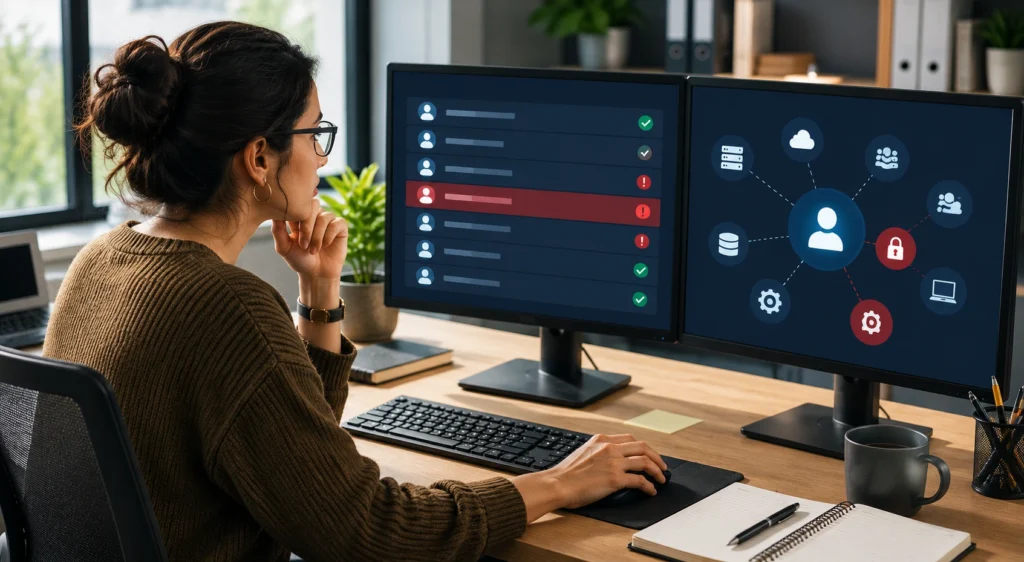
The most direct way to protect your digital assets is to control who can reach them in the first place. And that’s where most sites fall short. Weak access controls put customer records, payment details, website files, and admin credentials at risk. They’re also one of the most preventable security flaws on any site.
Over time, admin access builds up on most sites without anyone tracking it. Unused accounts and old third-party service connections sit open long after they’re needed. An audit will flag this immediately, so it’s worth fixing before that happens. Revoke access the moment someone leaves or changes roles.
You also need to review user roles regularly, because not everyone on your team needs full admin access. In practice, tight permissions mean that if one account gets compromised, the damage stays contained. Two-factor authentication and strong passwords then make those accounts harder to crack in the first place.
Third-party services and plugins need the same treatment, since malicious code often enters through integrations rather than the site itself.
A one-off website security audit tells you where your site stands today. The problem is, your site keeps changing after that. For example, new plugin vulnerabilities surface, team members change roles, and third-party integrations update. Each of those changes can open a new gap.
We’ve seen Brisbane business owners complete a full audit and walk away from their site’s security for over a year. A year later, new security threats had appeared, and Google had already marked their site as unsafe.
A one-off website security audit tells you where your site stands today. The problem is, your site keeps changing after that. New plugin vulnerabilities surface, team members change roles, and third-party integrations update. Each of those changes can open a new gap.
We’ve seen Brisbane business owners complete a full audit and walk away from their site’s security for over a year. A year later, new security threats had appeared, and Google had already marked their site as unsafe.
In reality, new vulnerabilities don’t wait for your next scheduled audit to show up. That’s why ongoing maintenance needs more than a single check. Here’s what it actually covers:
Security add-ons and updated website security measures close the gaps that open up between audits, so nothing slips through.
Believe it or not, cyber threats move fast, and a maintenance plan that doesn’t keep up leaves your site exposed. That’s why website security works best as a scheduled habit, sitting alongside software updates and backups rather than replacing them.
Website security is one of those areas where small businesses pay the price for waiting too long. Let’s be real, cyber attacks don’t slow down, vulnerabilities accumulate, and an unaudited site is an open invitation to attackers. And without the right security checks in place, that invitation stays open.
This article covered what a website security audit checks and why access controls and outdated software are the most exploited entry points. Regular website security maintenance is what stops new vulnerabilities from taking their place.
Attackers don’t wait, and neither should you. The team at DevelopersDex will take you through every step of the process, handling the audit, the fixes, and the ongoing checks your site needs.
The sooner you start, the better protected you’ll be.
Company Reviews